Building a hurricane-resistant home on the Texas coast comes down to four things: an elevated piling foundation, windstorm-rated framing certified to state standards, impact-rated windows and doors, and a continuous load path that ties the whole structure together against wind uplift. No home is truly “hurricane-proof,” but a properly engineered coastal home is built to survive a major storm — and to stay insurable while it does.
Kai Custom Homes builds exactly these homes on Galveston Island, with 35+ completed projects and 15+ years of coastal construction experience. Storm resilience is the buyer fear we hear most, so this guide answers the questions Texas Gulf Coast homeowners actually ask — in plain terms, backed by how we build.
Can You Build a Hurricane-Proof House?
No house is completely hurricane-proof, but you can build a hurricane-resistant home engineered to survive a major storm. The goal of coastal construction isn’t an indestructible house — it’s a structure that protects its occupants, stays standing, and remains repairable and insurable after a serious storm.
On the Texas coast, that resilience comes from following — and often exceeding — windstorm and flood building standards. A home built to these standards on Galveston Island is dramatically more likely to come through a hurricane intact than an older or inland-spec home. The phrase “hurricane-proof” is marketing; “hurricane-resistant, engineered to code and beyond” is the real and achievable standard.
What Makes a House Hurricane-Resistant?
A hurricane-resistant house combines elevation, wind-rated structure, protected openings, and a connected load path so that flood, surge, and wind each have an engineered answer. Four systems do the work.
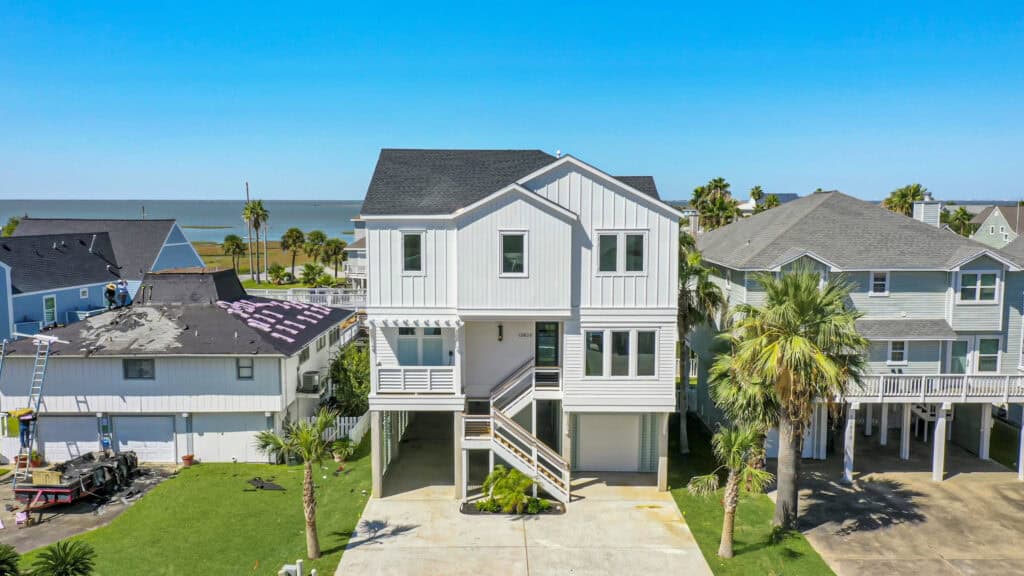
An Elevated Piling Foundation
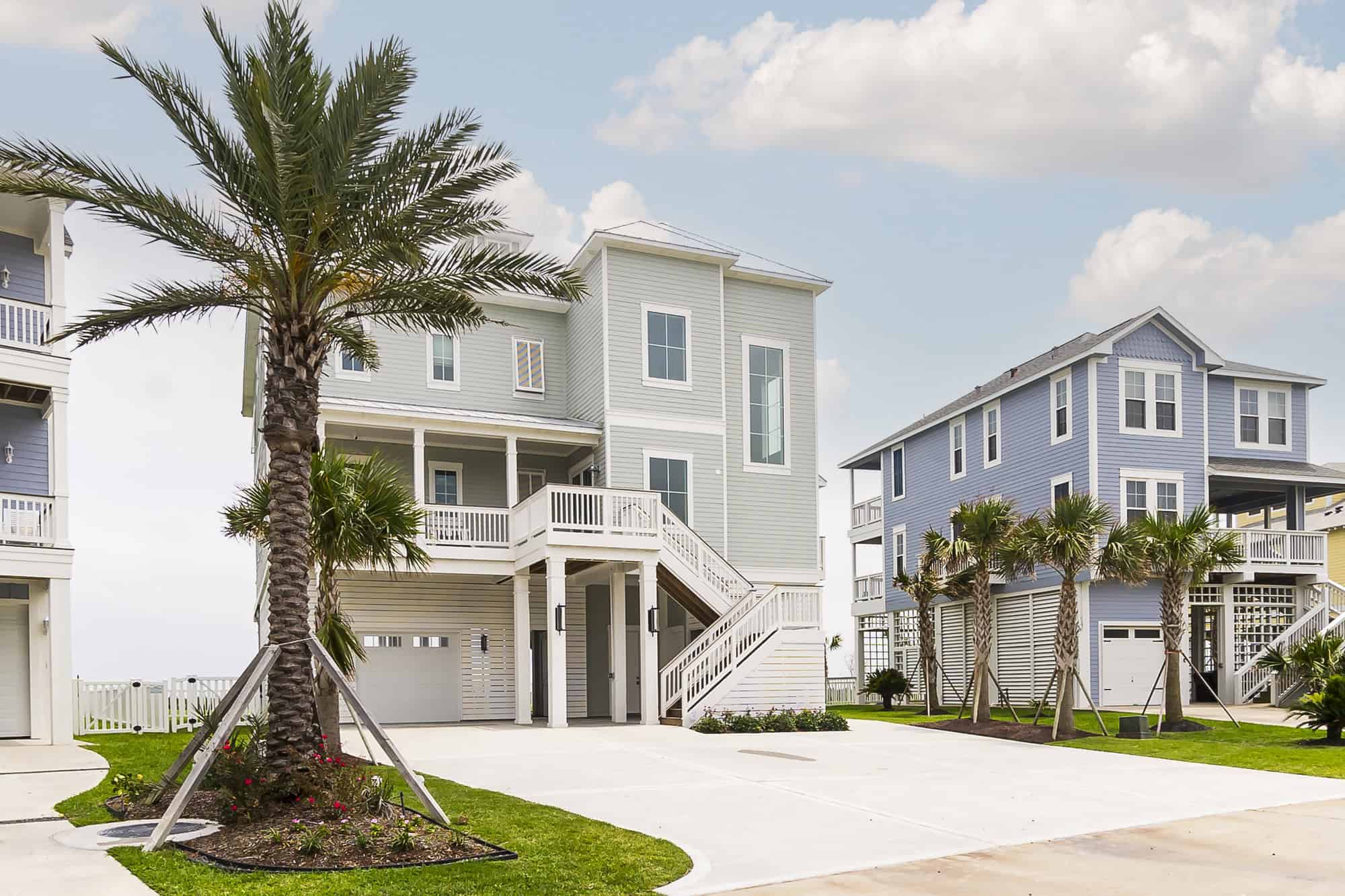
The foundation is the first line of defense. Coastal homes are built on driven pilings that elevate the living space above the Base Flood Elevation, so storm surge passes underneath rather than through the home. FEMA’s flood mapping program sets the required elevation for each lot, and building to or above it is what keeps the home dry and insurable.
Windstorm-Rated Framing and a Continuous Load Path
A hurricane-resistant home is framed so that wind forces travel in an unbroken path from the roof down through the walls and into the foundation. Hurricane straps, tie-downs, and engineered connections lock the roof to the walls and the walls to the pilings, resisting the uplift that tears ordinary homes apart. This work is built to the standards verified through the Texas Department of Insurance windstorm program.
Impact-Rated Windows and Doors
Openings are where storms get inside — and once wind enters, internal pressure can blow off a roof. Impact-rated windows and doors resist flying debris and keep the building envelope sealed. Protecting openings is one of the highest-value resilience investments on any coastal home.
Durable, Corrosion-Resistant Materials
Resilience also means lasting through the salt and humidity between storms. Stainless or galvanized fasteners, corrosion-resistant hardware, and durable siding and roofing keep the structure sound year after year, so it’s ready when a storm does come.
What Are Hurricane-Resistant Houses Made Of?
Hurricane-resistant houses on the Texas coast are typically built with engineered wood or steel framing, impact-rated glazing, durable siding like fiber cement, and corrosion-resistant metal connectors throughout — all assembled to a wind-rated structural design.
The specific materials matter less than how they’re engineered and connected. What turns a pile of strong materials into a storm-resistant home is the structural design: the load path, the connection details, and the windstorm certification that verifies it was built correctly. A premium material installed without the right connections offers little protection; a well-engineered standard material installed correctly performs.
> Worried about storm resilience for your build? Talk to Kai Custom Homes about how we engineer homes for the Gulf — 35+ times on this island and counting.
Why Are Some Home Shapes More Hurricane-Resistant Than Others?
Aerodynamic shapes — including dome and hip-roof designs — resist hurricanes better because they give wind fewer flat surfaces to push against and less edge to lift. Dome homes are often cited as highly hurricane-resistant precisely because their rounded form lets wind flow around them rather than slamming into broad vertical walls.
You don’t need a dome to build resilient, though. For conventional coastal homes, a hip roof (sloped on all four sides) outperforms a gable roof in high wind because it presents no large flat end for wind to catch. Simpler, more compact footprints with fewer complex rooflines also tend to perform better. Good coastal design balances these aerodynamic principles with the look and livability you actually want.
What Can Be Done to Existing Homes to Make Them More Hurricane-Resistant?
Existing coastal homes can be retrofitted with roof tie-downs, impact windows or shutters, reinforced garage and entry doors, and sealed roof decking to significantly improve hurricane resistance. You can’t easily change a home’s elevation or foundation after the fact, but you can strengthen the parts that fail first.
The highest-impact retrofits include:
- Reinforcing the roof-to-wall connection with hurricane straps or clips to resist uplift.
- Protecting openings with impact-rated windows or storm shutters, including the garage door, which is a common failure point.
- Sealing the roof deck so that if shingles are lost, water doesn’t pour into the home.
- Upgrading to impact-rated or reinforced doors at every entry.
Retrofits help, but they have limits — an older home built below current elevation and windstorm standards can only be improved so far. For a home that meets today’s resilience standards top to bottom, new construction engineered for the coast is the surest path.
Does Building Hurricane-Resistant Cost More?
Yes — hurricane-resistant construction is part of why Texas coastal homes cost more than inland builds, but the cost is built into standard coastal pricing, not an add-on. The piling foundation, windstorm framing, impact windows, and marine-grade materials are all included in the typical $350 to $500+ per square foot range for custom coastal construction.
Think of it as buying insurance you only pay for once. The resilience features that raise the build cost also lower your storm risk, protect your investment, and keep windstorm and flood insurance attainable. For the full cost picture, see our pillar guide on the cost to build a house in Galveston, TX.
How Does Hurricane-Resistant Construction Affect Insurance?
Building to windstorm and flood standards directly affects whether — and at what cost — you can insure a Texas coastal home. On the Gulf Coast, windstorm and flood coverage are separate from standard homeowners insurance, and both depend on how the home is built and elevated.
A home elevated above the Base Flood Elevation qualifies for more favorable flood insurance, because the risk of surge damage is lower. Likewise, a home with windstorm certification — the WPI-8 certificate verifying it meets state wind-load standards — is what makes windstorm coverage available in the first place. Skip the certification and you may find the home difficult or impossible to insure for wind, which also complicates financing and resale. In other words, the same engineering that protects the home physically also protects it financially. Building it right the first time is far cheaper than discovering at closing that the home can’t be covered.
How Kai Custom Homes Builds for the Gulf
Kai Custom Homes engineers every home for the realities of the Texas Gulf Coast — flood, wind, and salt — and certifies that work through the proper windstorm process. Across 35+ completed homes on Galveston Island, we’ve built piling foundations above the Base Flood Elevation, framed to windstorm standards with continuous load paths, installed impact-rated openings, and specified materials that last in a marine environment.
Owner Corby Broesche is personally involved in every build, and our local engineering relationships mean the structural design is done right and permitted smoothly. Just as important, we keep you informed throughout — written updates every two weeks during construction and weekly during finishes — so you understand exactly how your home is being built to stand up to a storm. See how we build in Galveston and browse our completed projects.
> Build a home that’s ready for storm season. Contact Kai Custom Homes to talk through resilient, windstorm-certified coastal construction for your Texas Gulf Coast home.
Frequently Asked Questions
Can you build a hurricane-proof house?
No house is truly hurricane-proof, but you can build a hurricane-resistant home engineered to survive a major storm. On the Texas coast, that means an elevated piling foundation, windstorm-rated framing, impact-rated openings, and a continuous load path. A home built to these standards is far more likely to come through a hurricane intact and remain insurable.
What makes a house hurricane-resistant on the Texas coast?
Four systems make a coastal home hurricane-resistant: an elevated piling foundation above the Base Flood Elevation, windstorm-rated framing with a continuous load path tying roof to foundation, impact-rated windows and doors that protect the building envelope, and corrosion-resistant materials. Texas requires windstorm certification through the Department of Insurance to verify the structure meets wind-load standards.
Are dome homes really more hurricane-resistant?
Yes, dome homes are highly hurricane-resistant because their rounded, aerodynamic shape lets wind flow around the structure instead of pushing against flat walls. You don’t need a dome, though — for conventional homes, a hip roof and a simpler, compact footprint also improve wind performance significantly while keeping a traditional look.
What can I do to make my existing coastal home more hurricane-resistant?
Retrofit the parts that fail first: reinforce the roof-to-wall connection with hurricane straps, add impact windows or storm shutters, reinforce the garage and entry doors, and seal the roof deck. These upgrades meaningfully improve resistance, though an older home built below current elevation and windstorm standards can only be improved so far.
Does hurricane-resistant construction cost extra?
The resilience features are built into standard coastal construction pricing rather than charged as an add-on. The piling foundation, windstorm framing, impact windows, and marine-grade materials are included in the typical $350 to $500+ per square foot range for Texas coastal homes — and they lower your storm risk while keeping insurance attainable.