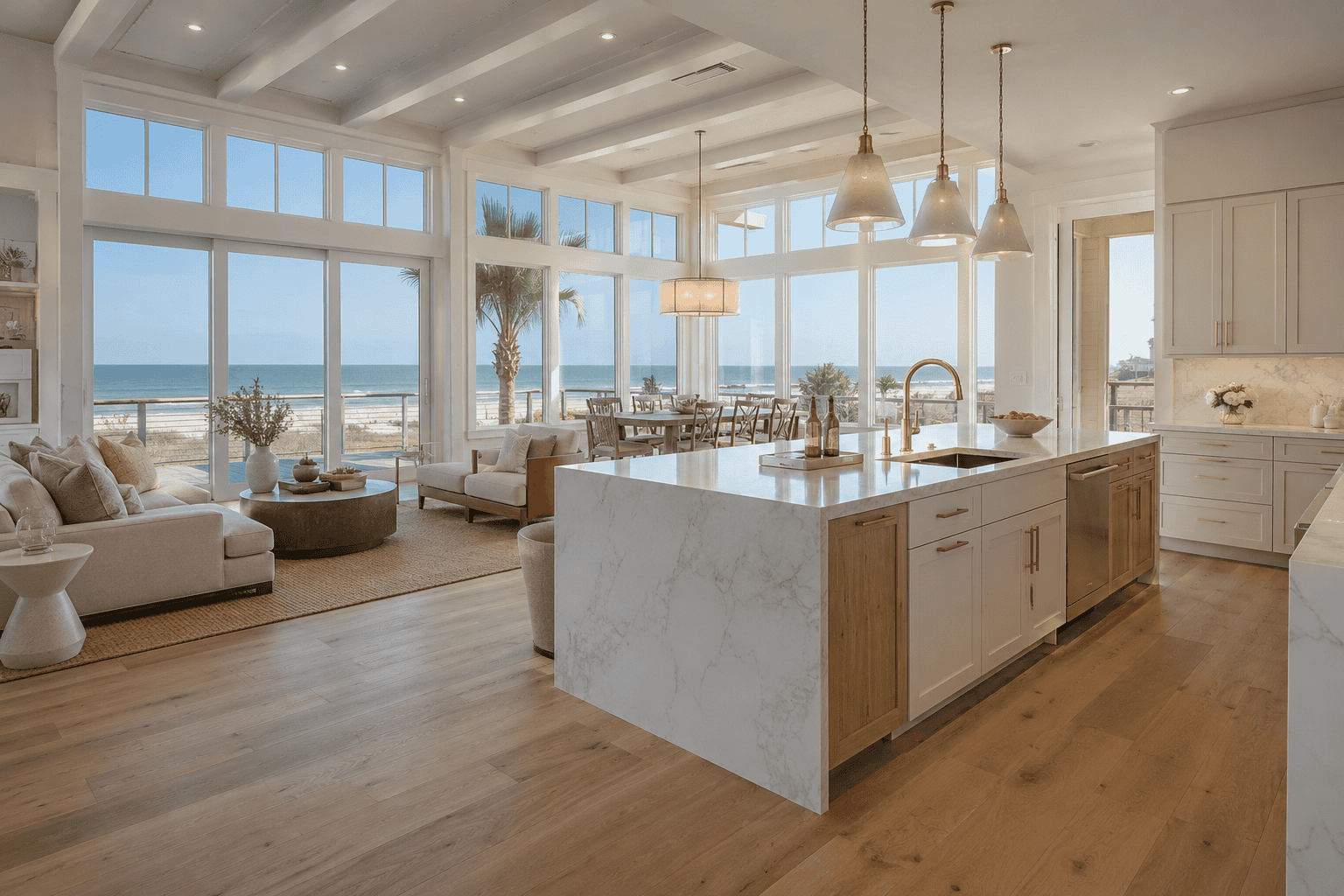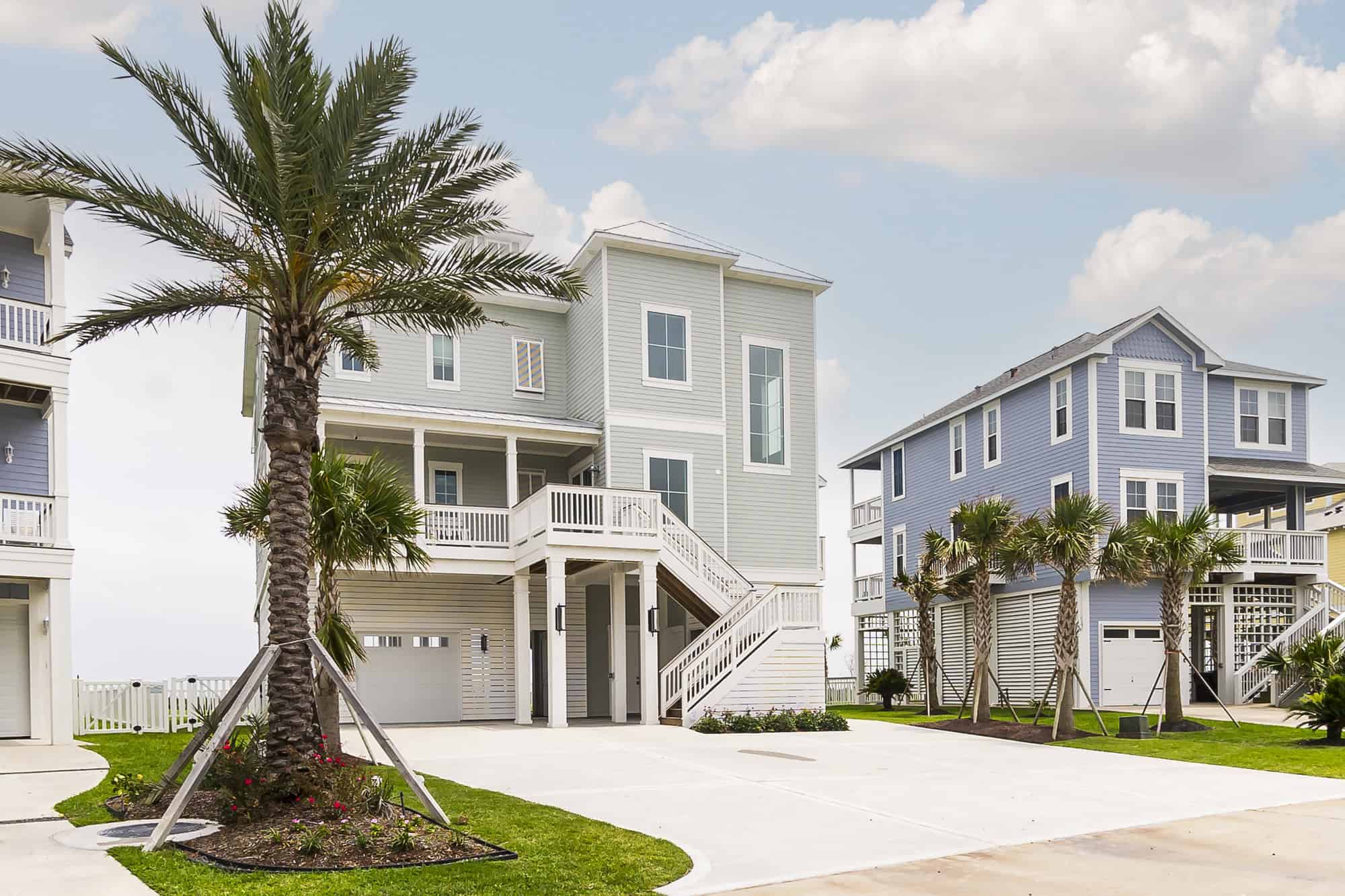
The cost to build a house in Galveston, TX typically runs $350 to $500+ per square foot for custom coastal construction. For a 2,500 to 4,000 square foot stilt home — the size most island buyers build — that puts a realistic budget in the $1.5M to $3M+ range, with a 12 to 18 month build timeline. Those numbers are higher than inland Texas for one core reason: building on a barrier island means engineering for flood, wind, and salt that a Houston subdivision never has to think about.
Kai Custom Homes is a luxury custom home builder based on Galveston Island, specializing in stilt and piling homes across the West End, Bolivar Peninsula, and Crystal Beach. We’ve completed 35+ homes on this island over 15+ years of coastal construction, and we publish real pricing because we’ve watched too many buyers waste months getting the runaround from builders who won’t give a straight answer. This guide gives you that straight answer: what coastal construction actually costs here, what drives the number up or down, and how to budget for a build you can trust.
What Does It Cost to Build a House in Galveston, TX?
Building a custom home in Galveston costs roughly $350 to $500+ per square foot as of 2026. Multiply that by your square footage and you have a working budget — but the range is wide on purpose, because where you land depends on elevation, finishes, lot conditions, and how complex your design is.
Here’s how that math plays out for common sizes on the island:
- 2,500 sq ft home: roughly $875,000 to $1.25M+
- 3,000 sq ft home: roughly $1.05M to $1.5M+
- 3,500 sq ft home: roughly $1.22M to $1.75M+
- 4,000 sq ft home: roughly $1.4M to $2M+
These figures cover the home itself — foundation, structure, systems, and finishes. They do not include the lot, which on the West End or beachfront can add substantially to your total project cost, nor soft costs like architectural design, engineering, permits, and surveys. Build those into your overall budget from the start so the per-square-foot number doesn’t surprise you later.
A quick note on why our range starts at $350 rather than the $200-$250 you might see quoted for inland Texas: a Galveston home sits on driven pilings, meets windstorm framing standards, and uses corrosion-resistant materials throughout. You’re not paying a premium for a logo — you’re paying for a structure engineered to survive the Gulf Coast. We break down exactly where that money goes in our guide to cost per square foot to build in Galveston.
Why Coastal Construction Costs More on Galveston Island
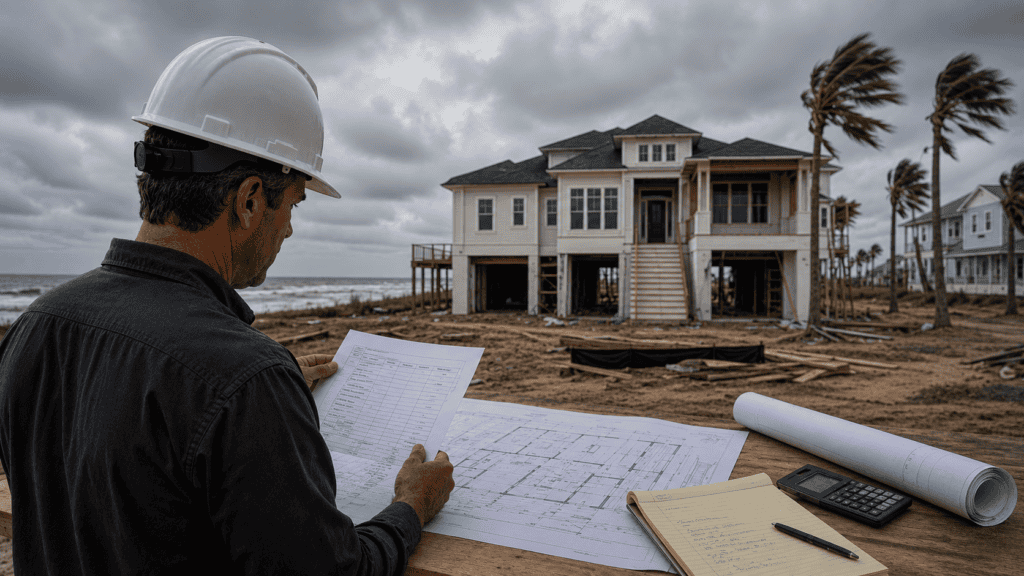
Coastal construction costs more than inland building because every home on a barrier island has to be engineered against flood, hurricane-force wind, and constant salt exposure. These aren’t upgrades — they’re code requirements and structural necessities, and they touch the foundation, the framing, and the finishes.
When a buyer asks why an island build costs $400 a foot instead of $250, this is the honest answer. The premium isn’t margin; it’s engineering. Three forces drive it.
Flood Elevation and Stilt Foundations
Most of Galveston’s buildable land sits in a FEMA-designated flood zone, which means your home has to be elevated above the Base Flood Elevation (BFE) on a piling or stilt foundation. According to FEMA’s flood mapping program, these zones determine how high your lowest floor must sit — and on much of the West End, that’s well above ground level.
Driving and capping pilings, building the elevated structure, and engineering the connections all cost more than pouring a slab on grade inland. The foundation alone can represent a meaningfully larger share of your budget than it would for a Houston build. It’s also non-negotiable: it’s what keeps the home dry in a surge and what makes it insurable.
Windstorm Engineering and Certification
Galveston County is a designated catastrophe area for windstorm, so homes here must be built and certified to specific wind-load standards. The Texas Department of Insurance windstorm program governs the inspections and the WPI-8 certificate of compliance you’ll need for windstorm insurance.
In practice that means engineered framing, hurricane straps and tie-downs, impact-rated windows and doors, and a roof system designed to stay attached in a major storm. Each of these adds cost over standard inland framing — and each is verified by a third-party windstorm inspector during construction. Skipping any of it isn’t an option if you want the home insured.
Salt, Humidity, and Material Choices
The Gulf air is hard on buildings. Salt accelerates corrosion, and humidity punishes anything that isn’t specified for a marine environment. That pushes you toward stainless or galvanized fasteners, corrosion-resistant hardware, fiber-cement or other durable siding, and HVAC and finishes chosen to last in coastal conditions.
You can build cheaper with inland-grade materials, but you’ll pay for it within a few years in repairs and replacement. We spec for longevity because we’ve seen what the Gulf does to homes that weren’t — across 35+ builds, the difference shows up fast.
What Drives Your Price Up or Down
Two homes of the same size on the same street can land $500,000 apart. The square-foot range is wide because these variables move your number within it. Knowing them upfront lets you make budget decisions on purpose instead of discovering them mid-build.
The biggest cost levers on a Galveston build are:
- Square footage and layout complexity. More space costs more, but so does complexity. A simple rectangular footprint is far cheaper to build than one with multiple rooflines, cantilevers, and curved walls.
- Elevation height. The higher your required BFE, the taller and more robust your piling foundation — and the more it costs. West End and beachfront lots often require greater elevation than lots behind the seawall.
- Finish level. This is the single widest variable. Builder-grade finishes versus designer-grade cabinetry, stone, fixtures, and flooring can swing your per-square-foot cost by $100 or more.
- Lot conditions. Soil, access, distance to utilities, and whether the lot needs fill or special site work all affect cost before the home even goes vertical.
- Outdoor living. Wraparound decks, ground-level entertaining areas, outdoor kitchens, pools, and boat lifts are common on the coast and add to the total.
- Design and engineering. Custom architectural plans and coastal engineering are soft costs that scale with the ambition of the design.
> Thinking about your own build? Before you fall in love with a plan, have a real pricing conversation with a builder who’ll give you honest numbers. Talk to Kai Custom Homes and we’ll walk you through what your specific home would cost — no runaround.
A Realistic Budget Breakdown for a Galveston Custom Home
A realistic Galveston build budget has four buckets: the lot, soft costs, hard construction costs, and a contingency reserve. Most first-time builders focus only on the third and get blindsided by the others. Here’s how a complete budget actually breaks down.
The Lot
If you don’t already own land, the lot is often the largest single line item and varies enormously by location — beachfront and canal-front West End lots command a premium over interior island lots. Many of our clients already own their lot before they call us, which simplifies budgeting considerably. If you’re still looking, factor the land in as its own number, separate from the build.
Soft Costs
Soft costs are everything that isn’t physical construction: architectural design, structural and coastal engineering, surveys, geotechnical work, permits, and floodplain review through Galveston County. These typically run a meaningful percentage of your construction cost and come due early, before you see a single piling go in the ground. Budgeting for them upfront keeps your project moving without cash-flow surprises.
Hard Construction Costs
This is the $350–$500+ per square foot figure — the foundation, framing, roof, mechanical and electrical and plumbing systems, insulation, windows and doors, siding, and interior finishes. It’s the bucket most people mean when they ask “what does it cost to build.” Your finish selections drive most of the variation here.
Contingency
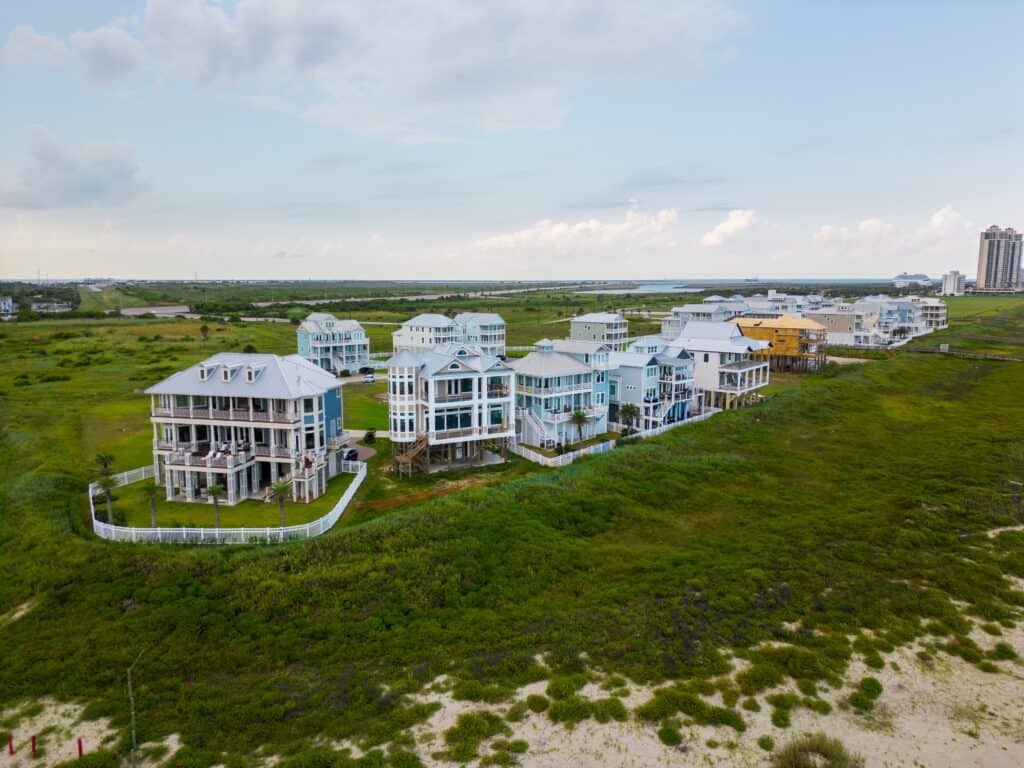
Every honest builder recommends a contingency reserve, typically 5–10% of construction cost, for the unknowns that surface on any custom build — a soil condition, a design change you decide you want, a material substitution. On a coastal build, a contingency isn’t pessimism; it’s planning. We’d rather you have it and not need it than need it and not have it.
Where Your Money Goes: Cost by Component
It helps to see how a Galveston build divides across the major systems, because it explains why the per-square-foot number is what it is. While every project is different, a custom coastal home’s hard costs tend to distribute across these components — and several of them are noticeably heavier than they’d be inland.
- Foundation and site work. On an inland slab build, the foundation is a relatively small slice of the budget. On a Galveston stilt home, the driven-piling foundation, elevated floor system, and site preparation claim a much larger share — this is the single clearest place the coastal premium shows up.
- Framing and structure. Windstorm-rated framing, hurricane connectors, and engineered roof systems cost more than standard inland framing because they’re designed and inspected to wind-load standards.
- Exterior envelope. Impact-rated windows and doors, corrosion-resistant siding, and a roof system engineered to stay attached in a storm all run higher than their inland equivalents.
- Mechanical, electrical, and plumbing. Comparable to inland builds, though elevated homes can add cost for running services up to the living level.
- Interior finishes. The widest variable and often the largest single bucket on a high-end home — cabinetry, stone, flooring, trim, and fixtures. Your selections here move the whole budget.
The takeaway: the components that make a coastal home survivable — foundation, framing, and envelope — are exactly the ones that cost more here than inland. That’s not a builder marking things up. It’s the price of building something engineered for a barrier island.
Is It Cheaper to Build or Buy in Galveston?
Whether it’s cheaper to build or buy depends on the market and what you want, but building gives you a new, code-current, fully insurable home designed exactly for your lot and lifestyle — which is why many island buyers choose it despite the cost. Buying an existing home can be faster and sometimes cheaper upfront, but on the coast it carries hidden risks that change the math.
Many existing Galveston homes were built years ago to older elevation and windstorm standards. That can mean higher insurance costs, harder financing, and expensive retrofits to bring the home up to current resilience — or a home that simply won’t perform in a major storm. When you build new, every dollar goes into a structure engineered to today’s flood and wind standards, with no deferred maintenance and no compromises baked in.
For buyers planning to keep the home for years — especially as a second home or future primary residence — building often delivers better long-term value even when the sticker price is higher. You get the floor plan you want, the finishes you choose, and the peace of mind that comes from knowing exactly how the home was built. For a step-by-step look at what building actually involves, see our guide to building a beach house in Texas.
How Long Does It Take to Build in Galveston?
A custom home in Galveston typically takes 12 to 18 months from groundbreaking to final walkthrough, not counting the design and permitting phase that comes before. Coastal builds run a little longer than inland ones because of the piling foundation, windstorm inspections, and floodplain permitting — each adds steps that can’t be rushed.
The phase most buyers underestimate is pre-construction. Architectural design, engineering, and permitting can take several months on their own before any construction begins. Building that into your timeline from the start means your move-in expectations stay realistic. For a full walkthrough of the process from lot to move-in, see our overview of building a house in Galveston, TX.
How to Avoid Cost Overruns on a Coastal Build
The best way to avoid cost overruns is to price the home accurately before you start and to work with a builder who communicates throughout. Most overruns come from one of two places: an underestimated starting budget, or a builder who didn’t flag problems until they became expensive.
A few practices protect your budget:
- Get real numbers before you commit. A builder who won’t discuss cost-per-square-foot until you’ve signed something is a builder who’ll surprise you later.
- Lock finishes early. Indecision and late changes are a top driver of overruns. Selecting finishes before construction keeps the budget — and the schedule — stable.
- Insist on regular communication. You should know your project’s status without having to chase it. At Kai, clients get written updates every two weeks during construction and weekly during finishes, so a small issue never becomes a budget surprise.
- Build in contingency. As above — plan for the unknowns so they don’t derail you.
This is where the builder you choose matters more than any single line item. We’ve built 35+ homes on this island, and the homes that came in on budget were the ones where the buyer and builder were aligned on the number from day one.
Red Flags That Signal a Build Will Go Over Budget
The clearest warning sign of a build that will blow its budget is a builder who won’t give you straight numbers before you commit. Cost overruns are rarely random — they’re usually visible early if you know what to watch for. Before you sign anything, watch for these red flags:
- Vague pricing. “It depends” is a fair starting point, but a builder who can’t or won’t give you a real cost-per-square-foot range after seeing your plans and lot is either inexperienced on the coast or hiding the number. Either way, it’s a risk.
- A suspiciously low bid. If one builder comes in far below the others, ask what’s missing. On the coast, a lowball bid often means underestimated foundation work, value-engineered materials that won’t last, or change orders waiting to surface once you’ve committed.
- No clear allowances. A budget that doesn’t spell out finish allowances is a budget designed to grow. When the cabinetry or stone allowance turns out to be a fraction of what you actually want, the difference becomes a change order.
- Thin coastal experience. A builder learning piling foundations, BFE, and windstorm code on your project will make expensive mistakes. You don’t want to fund someone’s learning curve on a $2M home.
- Poor communication from the start. If a builder is slow to respond and vague during the sales process, that won’t improve once your money is committed. Communication problems and budget problems travel together.
A builder who prices honestly, documents allowances clearly, and communicates consistently is your best protection against overruns — far more than any single line item in the budget.
What’s Included — and What’s Not
When you compare builder estimates, make sure you’re comparing the same scope, because what’s “included” varies. A complete construction estimate for a Galveston home should generally cover the piling foundation, structural framing, roof, exterior envelope, mechanical systems, insulation, interior finishes within stated allowances, and windstorm-compliant construction with certification.
What’s typically not in the per-square-foot construction figure: the lot, architectural and engineering fees, surveys and geotechnical work, permits and floodplain review, landscaping and hardscaping, pools and boat lifts, furnishings, and any off-site improvements. None of these are hidden costs when you plan for them — they only become surprises when an estimate doesn’t make the boundaries clear. The most useful question you can ask any builder is simply: “What is and isn’t in this number?”
Why Build With Kai Custom Homes in Galveston
Kai Custom Homes builds custom coastal homes on Galveston Island with two things most island builders don’t offer together: a deep, verifiable track record and radical pricing transparency. We’ve completed 35+ named, photo-documented homes here, and we’ll give you a real cost-per-square-foot range in your first conversation — not a runaround.
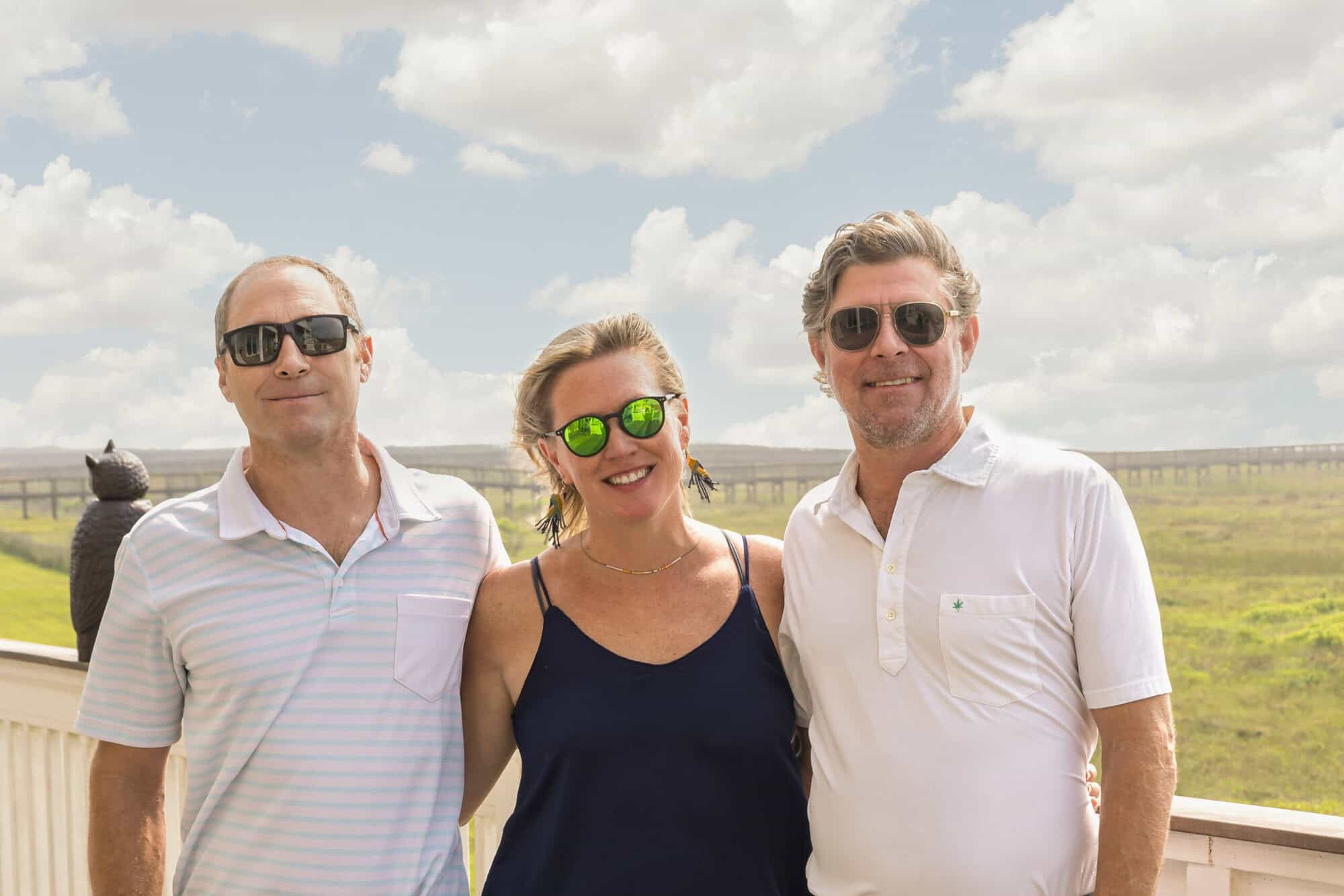
Owner Corby Broesche is personally involved in every build. We handle the full scope of coastal construction — stilt and piling foundations, FEMA flood zone compliance, BFE requirements, and windstorm certification — with local engineering and architect relationships that smooth permitting and reduce surprises. And our communication model means you’re never left wondering what’s happening on your job site.
Building a $2M coastal home should feel like a partnership, not a leap of faith. That’s the standard we hold ourselves to on every project. See how we build custom homes and browse our completed projects to get a feel for what’s possible on your lot.
> Ready to talk numbers for your Galveston build? Contact Kai Custom Homes for an honest pricing conversation — real ranges, real answers, and a clear picture of what your coastal home will cost.
Frequently Asked Questions
How much does it cost to build a house in Galveston, TX?
Building a custom home in Galveston typically costs $350 to $500+ per square foot in 2026, which puts a 2,500–4,000 sq ft stilt home in the $1.5M to $3M+ range. The exact number depends on elevation, finishes, lot conditions, and design complexity. These figures cover construction and exclude the lot and soft costs like design and permitting.
Why is it more expensive to build on Galveston Island than inland?
Island construction costs more because every home must be engineered against flood, hurricane-force wind, and salt. That means an elevated piling foundation above the Base Flood Elevation, windstorm-rated framing and impact windows certified through the Texas Department of Insurance, and corrosion-resistant materials throughout. These are code requirements and structural necessities, not optional upgrades.
Does the cost include the lot?
No. Per-square-foot construction costs cover the home itself — foundation, structure, systems, and finishes. The lot is a separate cost that varies widely by location, with beachfront and canal-front West End lots commanding a premium. Soft costs like architectural design, engineering, and permitting are also separate and should be budgeted from the start.
How long does it take to build a custom home in Galveston?
A Galveston custom home typically takes 12 to 18 months from groundbreaking to final walkthrough, plus several months of design and permitting beforehand. Coastal builds run slightly longer than inland ones because of the piling foundation, windstorm inspections, and floodplain permitting.
What’s the most reliable way to get an accurate price for my build?
The most reliable way is to have a real pricing conversation with an experienced local builder before you finalize plans. A builder who knows Galveston can price your specific design, elevation, and finish level accurately and flag cost drivers early. Kai Custom Homes provides transparent cost-per-square-foot ranges from the first conversation — reach out here.