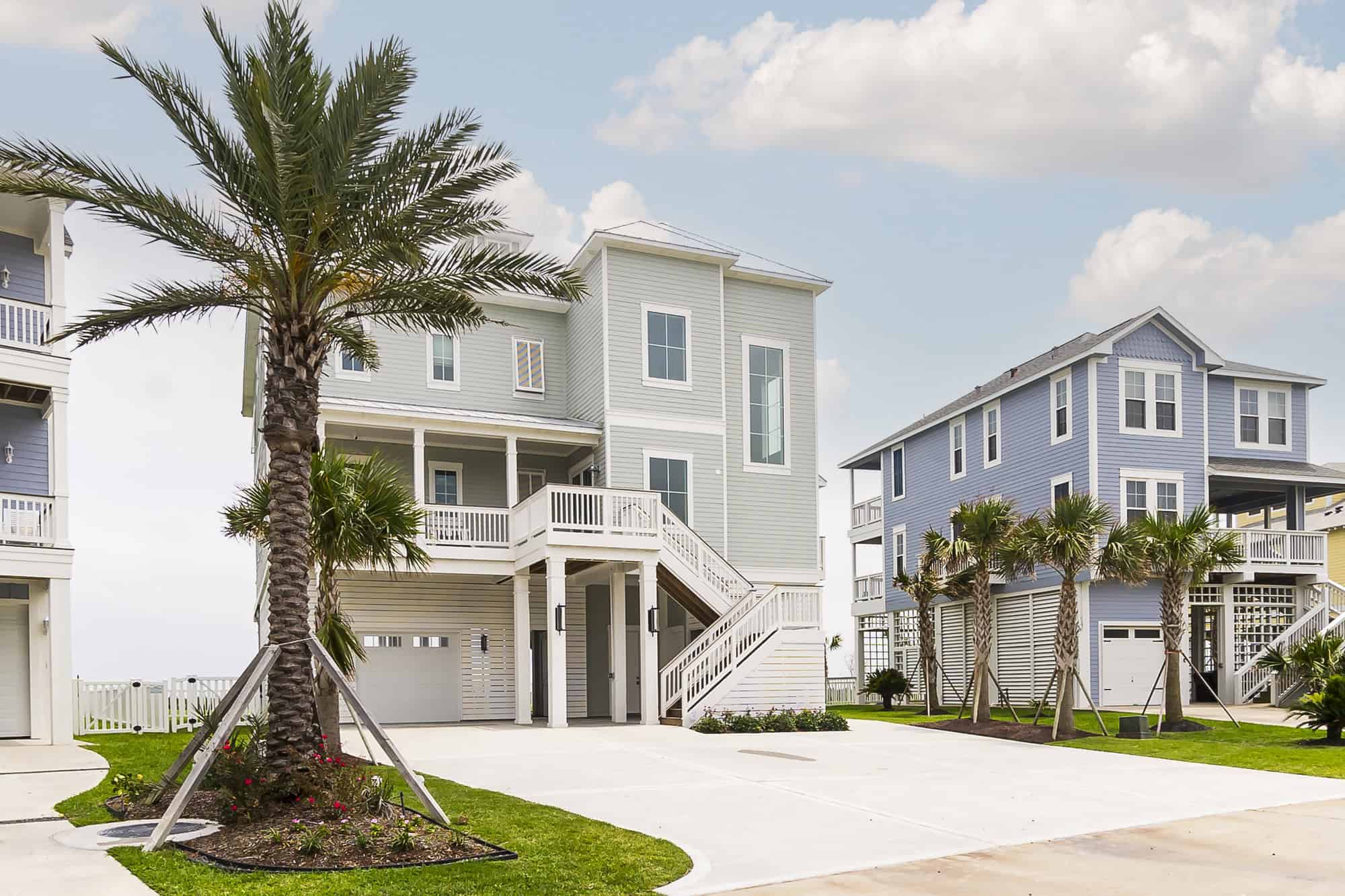
Tiki Island is a small, incorporated village of canal-front homes in Galveston County, Texas, sitting in Jones Bay just off I-45 before the Galveston Causeway. Most of its lots touch water, most of its homes are raised on pilings, and almost every owner has a boat within a few steps of the back door.
We’re Kai Custom Homes, a Galveston custom home builder with 35+ completed coastal homes, and we build elevated homes in exactly this kind of canal and bay setting. This guide covers what you need to know before you build on Tiki Island: how the village works, what a canal lot demands, the permit and elevation rules, insurance, and what a new custom home here costs.
What Is Tiki Island, Texas?
Tiki Island is a man-made canal community and a Type A general-law village, incorporated on August 30, 1982. Developers dug the canals in the 1960s and used the dredged fill to raise the land several feet above sea level, which is why roughly 70% of the village’s area is water.
A few facts that shape life, and building, here:
Population: 1,106 at the 2020 census, in about 1,000 single-family homes.
Location: Exit 4 off I-45, about five miles from Galveston. The village has one main entrance.
Local government: its own mayor and aldermen, full-time police department, municipal court and volunteer fire department, per the Texas State Historical Association’s village history.
Street names: Polynesian throughout, from Bora Bora to Diamond Head.
Water access: canals open to West Bay, Jones Bay, Galveston Bay and the Intracoastal Waterway.
About half the homes are second homes, and that’s the pattern we see with our own clients: Houston couples building the place they’ve talked about for years, a short drive from home.
Is Tiki Island on Galveston Island?
No. Tiki Island sits on the mainland side of the causeway, in the bay. It’s a separate municipality with its own permits, police and ordinances. That matters in three practical ways.
You permit with the village, not the City of Galveston.
Your windstorm standard differs. The village’s permit guidelines build to the Texas Department of Insurance “Inland I” wind zone, not the Seaward zone that applies on the island itself.
There’s no beach. You’re trading surf and sand for a boat slip and bay access, which is exactly why many fishing and boating families choose Tiki over the West End.
Building on a Canal Lot vs. Buying Resale
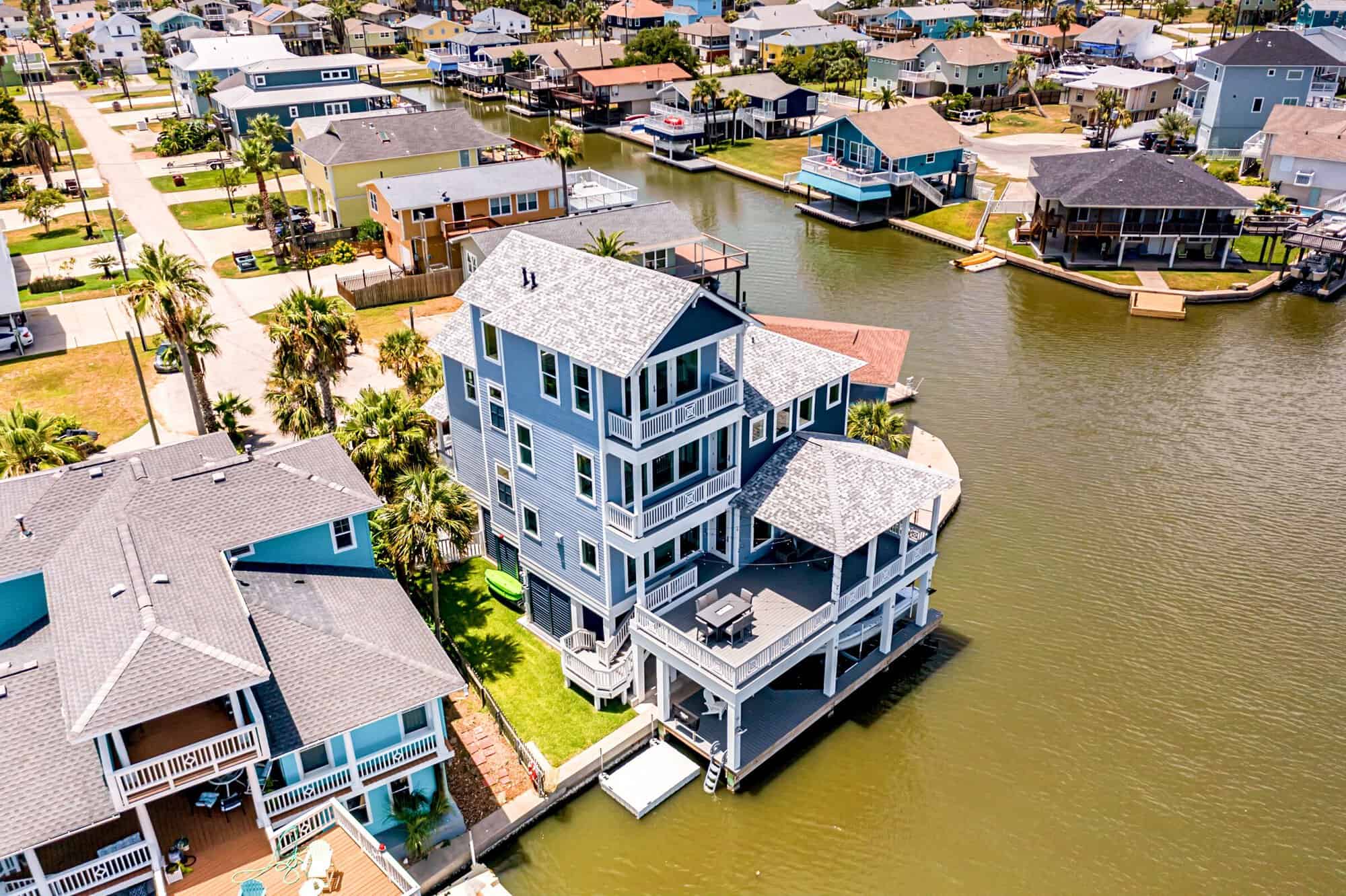
Many Tiki Island homes date from the village’s early decades, and the market reflects it: most homes list for under about $1 million. A new custom home is a different product, built to current code, current elevation rules and current wind standards.
Here’s how we’d frame the choice for a buyer:
Buy resale if you want to be on the water this season and you’re comfortable with an older home’s elevation, wiring, windows and roof.
Build new if you plan to own for a decade or more, want a layout designed around your view and your boat, and want lower long-term insurance and maintenance exposure.
Buy a tear-down lot if you like a specific canal location but not the house on it. The lot is what you’re really paying for.
Before you buy any lot, have a builder look at it. The questions that change your budget are ones buyers don’t usually think to ask: how deep the pilings must go, whether the bulkhead needs replacing, and how the finished floor height will sit next to the neighbors. Corby Broesche, Kai’s owner, personally sets the elevation and piling height on every home we build. He doesn’t hand it to a superintendent.
If you’re weighing a specific Tiki Island lot, we’re glad to walk it with you and give you a straight read on what it will take to build there. Start with a note on our contact page.
Tiki Island Permits and Elevation Requirements
Tiki Island issues its own building permits through the village building inspector, and it builds to the 2018 International Residential Code, the 2017 National Electrical Code and the TDI windstorm code. The village’s guidelines state plainly that no variances are issued on building codes.
Flood elevation and freeboard
The village’s flood maps include both A and V zones, and its permit forms assume V-zone construction. The core rules:
Freeboard: your home must sit 2 feet above the base flood elevation (BFE). In a V zone, that’s measured to the bottom of the lowest horizontal structural member, not the floor.
Engineering: a V-Zone Design Certificate sealed by a professional engineer, plus an NFIP elevation certificate.
Pilings: minimum 10-inch by 28-foot house piles; in-water piles 32 feet, marine-treated.
Below the house: enclosed space under the BFE is capped at 299 square feet, with breakaway walls only. No bathrooms or sewer plumbing at ground level.
That 299-square-foot cap is worth planning around from day one. A bigger enclosure can sharply raise your flood insurance premium, so we design ground-level storage, parking and outdoor living to stay open and lattice-screened instead.
The permit process
Expect a $100 plan review fee, two sets of engineer-stamped plans, a $1,500 construction bond and village registration for every contractor on the job. Electrical, plumbing, HVAC, pools, fences and gas each need their own permit.
Two local details catch newcomers:
Deed restrictions. The Tiki Island Civic Association’s architectural committee reviews plans for most sections. A handful of sections, including Tiki Yacht Club Colony and Tiki Cove Estates, run their own review.
Truck weight limits. A village ordinance caps vehicles at 20,000 pounds per axle and 50,000 pounds total. That changes how concrete and lumber get delivered, and a builder who doesn’t plan for it loses days.
Docks and boat lifts that extend over West Bay or Jones Bay sit on state-owned submerged land, so changes go through the Texas General Land Office’s permit process as well as the village.
How Did Tiki Island Fare in Hurricane Ike?
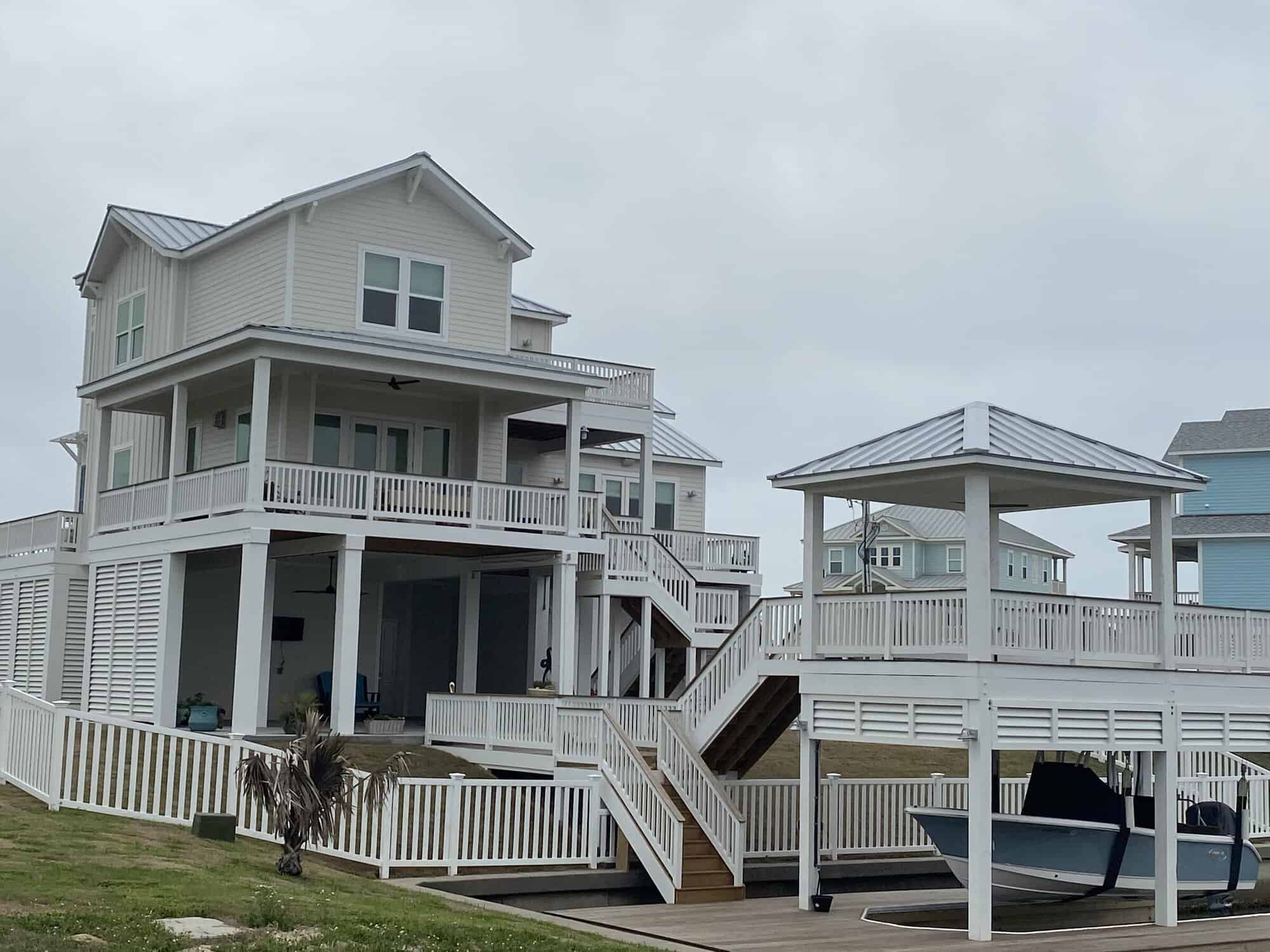
Well, largely because of how its homes were built. Ike pushed a 10- to 12-foot surge across the village in 2008, followed by a second surge from the opposite direction after the eye passed. FEMA’s account of the storm credits tall concrete pilings and breakaway ground-floor walls for keeping damage limited, and no residents were killed, injured or missing.
That’s the lesson we build around on every coastal home. The structure lives above the water. What sits below the flood line is designed to let water through, not to fight it.
It’s also why we lean toward concrete columns and insulated concrete form (ICF) walls rated for 200 mph wind loads wherever a client’s plans allow. Most builders on this coast still frame in wood; concrete costs more up front and pays you back every storm season.
Tiki Island Home Insurance
Tiki Island homes need flood insurance and windstorm coverage, and a new build puts you in the strongest position for both.
Windstorm: Galveston County is one of the Texas Department of Insurance’s first-tier coastal counties. To qualify for Texas Windstorm Insurance Association (TWIA) coverage, your home needs a WPI-8 certificate from inspections made during construction. See TDI’s windstorm inspection program for how that works.
Flood: the village participates in FEMA’s Community Rating System, which has earned residents a discount on National Flood Insurance Program premiums. Confirm the current class with your agent before you budget.
Elevation drives price. Every foot you build above the required elevation typically lowers flood premiums. We’ll show you the trade-off in dollars before you decide how high to go.
What Does It Cost to Build a Custom Home on Tiki Island?
A custom elevated home on the Texas coast typically runs about $350 to $500+ per square foot for construction. For the 2,500 to 4,000 square foot homes we usually build, that puts most projects between $1.5 million and $3 million or more, before the lot.
What pushes a Tiki Island build toward the top of that range:
Bulkhead work. Replacing or reinforcing a failing bulkhead can be a major line item on its own.
Docks, boat lifts and slips. Most owners want at least one lift. Marine piles and permitting add cost and time.
Piling depth and elevation. V-zone engineering and taller pilings cost more than a standard slab home by a wide margin.
Concrete and ICF construction versus wood framing.
Finish level. Tile, millwork and cabinetry are where budgets move most once the structure is set.
Timeline: plan on 12 to 18 months from permit to keys. During construction, you get a written update from us every two weeks, and every week once we reach finishes. You’ll always know where your home stands.
Short-Term Rentals on Tiki Island
Short-term rentals have been restricted on Tiki Island since 2014, when the village passed an ordinance limiting them to homes that were already renting before 2011. The rule was challenged in court, and the legal picture has shifted over time.
If rental income is part of your plan, confirm the current ordinance with the village before you buy a lot. For most of our Tiki clients, it isn’t: they’re building for their own family.
Frequently Asked Questions About Tiki Island
Is Tiki Island, Texas man-made?
Yes. Developers dug its canals in the 1960s and used the dredged material to raise the land several feet above the bay. Today about 70% of the village’s area is water.
Does Tiki Island flood?
Yes, in major storms, which is why homes are built on pilings above the base flood elevation. Hurricane Ike sent a 10- to 12-foot surge through the village in 2008. Homes elevated to code largely came through with damage limited to breakaway ground floors.
Where is Tiki Island?
Tiki Island is in Galveston County, in Jones Bay off I-45 at Exit 4, just before the Galveston Causeway. It’s about five miles from Galveston and roughly an hour from central Houston.
Can you rent out a house on Tiki Island?
Short-term rentals are restricted. A 2014 village ordinance limited them to homes already renting before 2011. Check the current rules with the Village of Tiki Island before you count on rental income.
Do I need a builder who has built in the village?
You need a builder who knows V-zone construction and coastal permitting cold. Tiki Island’s rules on freeboard, enclosures, pilings and truck weights are specific, and mistakes show up as delays and change orders.
Build Your Tiki Island Home With Kai
A canal lot on Tiki Island gives you something the West End beaches can’t: your boat at your back door and open bay in every direction. Getting the house right comes down to elevation, pilings, the bulkhead and a permit set the village approves the first time.
That’s the work we do every day. Call us at 713-909-0059 (Corby and his team pick up the phone), or send us your lot details through our contact page. We’ll give you a real number and tell you exactly what drives it.