Building a beach house in Texas means budgeting $350 to $500+ per square foot, building on an elevated stilt foundation, and meeting coastal flood and windstorm regulations that don’t apply to inland homes. For most buyers — many of them Houston and Dallas families building a second home on the Gulf Coast — that translates to a $1.5M to $3M+ project over 12 to 18 months. This guide walks you through the costs, the rules, and what to expect before you break ground.
Kai Custom Homes is a luxury coastal builder on Galveston Island with 35+ completed homes and 15+ years building on the Texas Gulf Coast. We specialize in exactly this kind of project — custom stilt homes in FEMA flood zones — and we believe the more you understand going in, the better your build goes. Here’s what every Texas beach house buyer should know.
What Does It Cost to Build a Beach House in Texas?
A custom beach house on the Texas coast costs $350 to $500+ per square foot to build in 2026. For a typical 2,500 to 4,000 square foot home, that’s a construction budget of roughly $875,000 to $2M+, before the lot and soft costs.
That’s higher than building inland, and the gap is structural, not cosmetic. A Gulf Coast home sits on driven pilings, frames to windstorm standards, and uses corrosion-resistant materials throughout. You’re paying to build something that survives storm season — and stays insurable — for decades.
Your final number depends on a handful of factors:
- Finish level — builder-grade versus designer-grade is the widest swing in your budget.
- Elevation height — the higher above the Base Flood Elevation you must build, the more your foundation costs.
- Design complexity — simple footprints cost less than multi-roofline, cantilevered designs.
- Lot conditions — soil, access, and utilities affect site costs before the home goes up.
- Outdoor living — decks, outdoor kitchens, and pools are coastal staples that add to the total.
For a full breakdown of these costs on Galveston Island specifically, see our pillar guide on the cost to build a house in Galveston, TX.
The Coastal Rules You Have to Build Around
Texas beach houses must comply with flood elevation, windstorm, and local permitting rules that govern how — and how high — you can build. These aren’t optional, and they shape the design and cost of every coastal home. There are three you need to understand before you start.
Flood Zones and Base Flood Elevation
Most buildable Gulf Coast land sits in a FEMA-designated flood zone, which requires your home’s lowest floor to be elevated above the Base Flood Elevation (BFE) on pilings. FEMA’s flood mapping program defines these zones and elevation requirements, and they vary lot by lot. The BFE for your specific parcel determines how tall your stilt foundation must be — and it’s one of the first things a good builder checks.
Elevating the home isn’t just compliance; it’s what keeps it dry in a storm surge and what makes flood insurance affordable. Build below the required elevation and you’ll struggle to insure — or sell — the home.
Windstorm Standards and Certification
The Texas coast is hurricane country, and the state regulates accordingly. Homes in designated catastrophe areas must be built and inspected to windstorm standards through the Texas Department of Insurance windstorm program, which issues the WPI-8 certificate of compliance you’ll need for windstorm insurance.
In practice, that means engineered framing, hurricane straps and tie-downs, impact-rated windows and doors, and a roof system designed to stay attached in high winds. A third-party windstorm inspector verifies the work during construction. It’s a layer of oversight inland homes don’t have — and it’s there to keep your home standing.
Local Permitting and Floodplain Review
Beyond state windstorm rules, each coastal county and municipality has its own permitting and floodplain review process. On Galveston Island, that means working through Galveston County’s floodplain requirements alongside standard building permits. The process adds time, and navigating it well is one of the clearest signs of a builder who actually knows the coast.
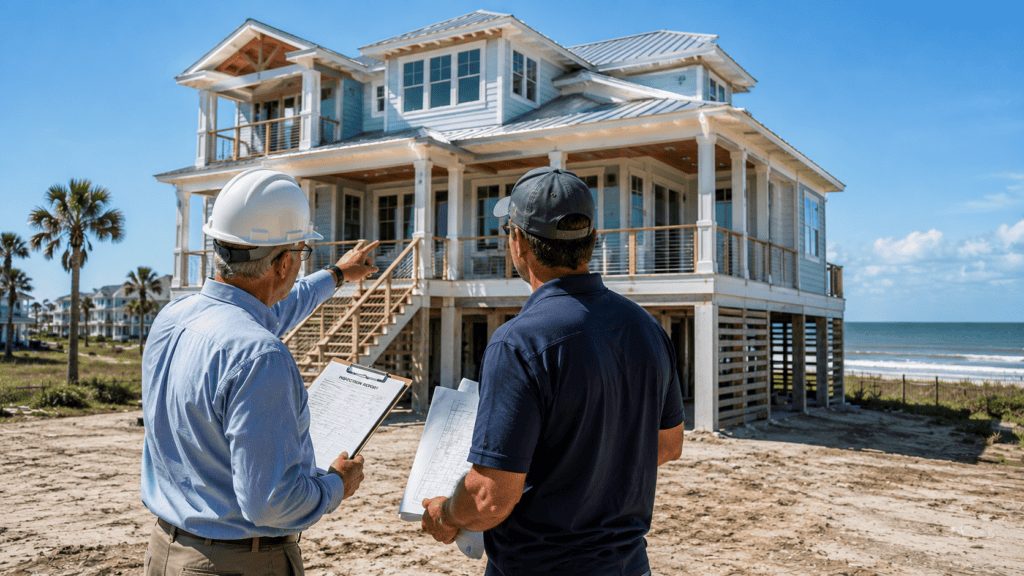
Why a Stilt Foundation Is the Heart of a Texas Beach House
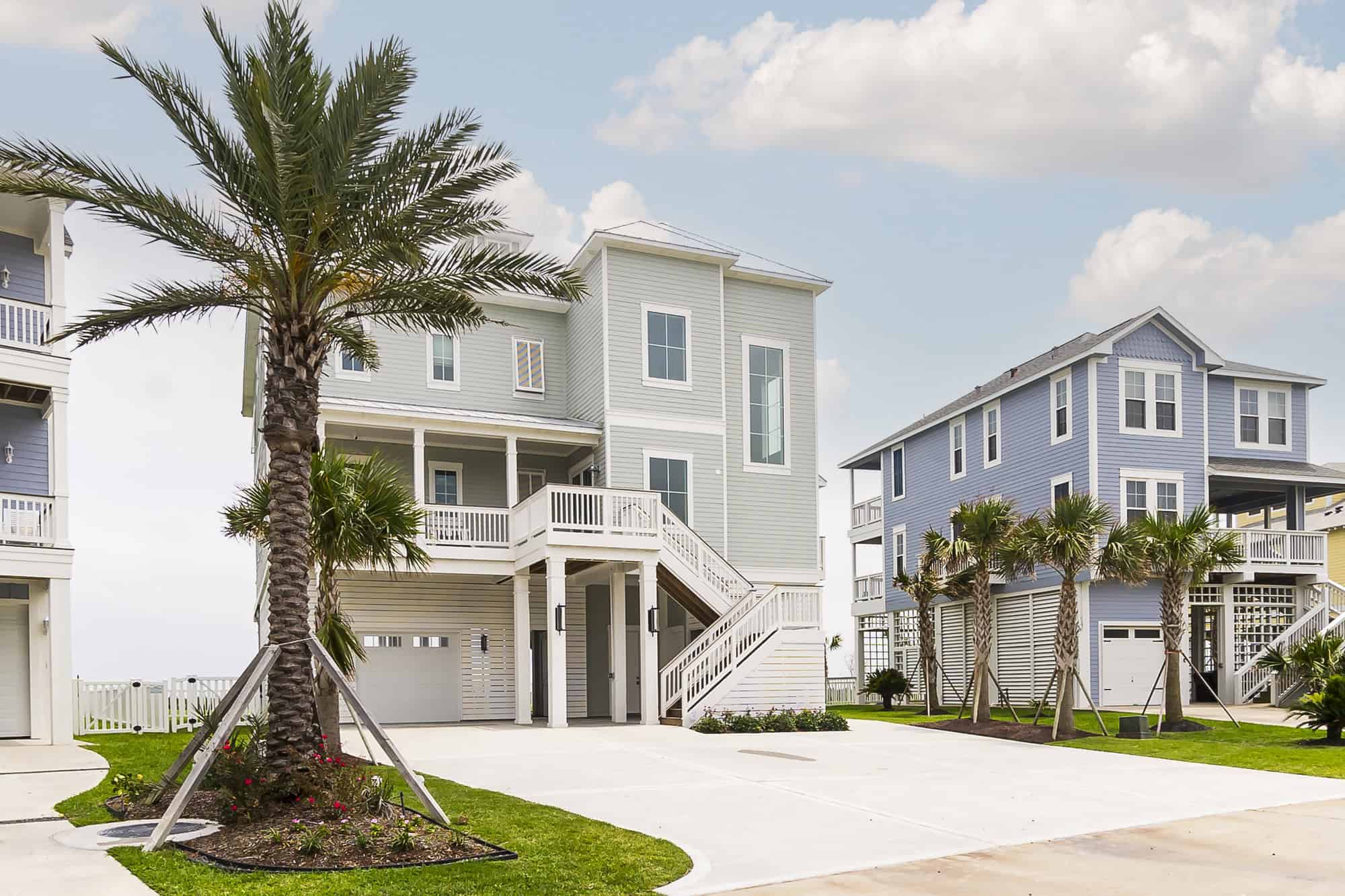
The stilt — or piling — foundation is what makes a Texas beach house possible, lifting the living space above flood and surge while anchoring the home against wind. Everything else is built on top of it, literally and financially.
A piling foundation works by driving deep structural posts into the ground until they reach load-bearing soil, then building the elevated home on top. This raises the home above the Base Flood Elevation, lets storm surge pass underneath rather than through the living space, and — when engineered correctly — ties the structure together so it resists uplift in a hurricane.
It’s also why coastal construction costs more than a slab-on-grade inland build. The foundation is more complex, the engineering is more demanding, and the connections between pilings, floor system, and framing all have to be designed for forces an inland home never faces. Done right, it’s the difference between a home that weathers a storm and one that doesn’t. We go deeper on the engineering in our guide to hurricane-proof home building on the Texas coast.
> Planning a Gulf Coast build? A builder who knows coastal code and engineering will save you time, money, and stress. Talk to Kai Custom Homes about your Texas beach house — we’ve done this 35+ times.
What to Expect During the Build
Building a beach house in Texas typically takes 12 to 18 months of construction, preceded by several months of design and permitting. Knowing the phases helps you set realistic expectations and spot a builder who runs a tight process.
The journey generally looks like this:
- Pre-construction. Design, structural and coastal engineering, surveys, and permitting. This phase is easy to underestimate but critical — it sets up everything that follows.
- Foundation. Pilings are driven and capped, and the elevated floor system goes in. This is where the coastal engineering becomes real.
- Structure and dry-in. Framing, roof, windows, and doors — getting the home weather-tight and windstorm-compliant.
- Systems. Electrical, plumbing, and HVAC roughed in and inspected.
- Finishes. Cabinetry, flooring, fixtures, and the details that make it your home. This is the longest and most variable phase.
- Final walkthrough. Inspections cleared, certifications in hand, and the keys are yours.
The single best predictor of a smooth build is communication. At Kai, clients get written updates every two weeks during construction and weekly during finishes — so you always know where your project stands, even if you’re managing the build from Houston or Dallas.
Should You Build a Beach House as a Second Home or Investment?
Many Texas beach houses are built as second homes that double as rental investments, and the Gulf Coast supports that model well — but it should shape your design decisions from the start. If you plan to rent the home when you’re not using it, durability and low-maintenance finishes matter even more, and layout choices like guest-friendly bedrooms and generous outdoor living can affect rental appeal.
It also affects budgeting. A home built purely for personal use can prioritize exactly your tastes; one meant to generate rental income benefits from broader appeal and finishes that hold up to turnover. The good news is that the same coastal engineering that makes a beach house safe — elevation, windstorm construction, durable materials — also makes it a more resilient, more insurable, and ultimately more valuable asset whether you keep it for family or rent it out. Deciding how you’ll use the home before you design it keeps those choices aligned with your goal.
What Separates a Great Texas Beach House Builder
The best Gulf Coast builders combine a verifiable track record, deep coastal-code expertise, and honest communication — the three things that keep a complex build from going sideways. When you’re choosing who to trust with a multi-million-dollar coastal home, look for:
- Proven coastal experience. Not “we build all over Texas,” but a real, documented portfolio of beach homes on the coast. Inland experience doesn’t transfer to pilings, BFE, and windstorm code.
- Pricing transparency. A builder who gives you real cost-per-square-foot numbers upfront respects your time and your budget. One who dodges the question will keep dodging.
- Regulatory fluency. FEMA flood zones, BFE, windstorm certification, and county floodplain permitting are second nature to a true coastal builder — and a learning curve you don’t want to fund.
- A communication system. You should never have to chase your builder for a status update. A structured update model is a sign of a builder who runs projects, not chaos.
Kai Custom Homes brings all four. With 35+ completed homes on Galveston Island, transparent pricing from the first conversation, deep coastal regulatory expertise, and owner Corby Broesche personally involved in every build, we turn the most demanding Gulf Coast projects into partnerships our clients actually enjoy. See how we build and browse our completed projects.
> Ready to build your Texas beach house? Contact Kai Custom Homes for an honest conversation about costs, coastal rules, and what your home would take to build right.
Frequently Asked Questions
How much does it cost to build a beach house in Texas?
A custom Texas beach house costs $350 to $500+ per square foot to build in 2026, or roughly $1.5M to $3M+ for a 2,500–4,000 sq ft home. The figure covers construction and excludes the lot and soft costs like design, engineering, and permitting. Finish level, elevation height, and design complexity drive where you land in the range.
Do you have to build a beach house on stilts in Texas?
In most Texas coastal areas, yes. Buildable land typically sits in a FEMA flood zone that requires the home’s lowest floor to be elevated above the Base Flood Elevation on a piling foundation. Elevating the home protects it from storm surge and keeps it insurable — building below the required elevation isn’t a practical option.
What permits do you need to build on the Texas coast?
You’ll need standard building permits plus windstorm certification through the Texas Department of Insurance and floodplain review through your local county — on Galveston Island, that’s Galveston County. A windstorm inspector verifies the home meets wind-load standards during construction, which is required for windstorm insurance.
How long does it take to build a beach house in Texas?
Construction typically takes 12 to 18 months, with several additional months of design and permitting beforehand. Coastal builds run slightly longer than inland ones because the piling foundation, windstorm inspections, and floodplain permitting each add steps that can’t be rushed.
Can I manage a Gulf Coast build remotely from Houston or Dallas?
Yes — many beach house buyers do, and the key is a builder with a strong communication system. Kai Custom Homes provides written updates every two weeks during construction and weekly during finishes, so out-of-town clients always know their project’s status without having to be on site.
Planning a build on Galveston Island or the Bolivar Peninsula? Call Corby direct at 713-909-0059 — you’ll get a real person and a straight answer — or start the conversation here and we’ll follow up within the day.