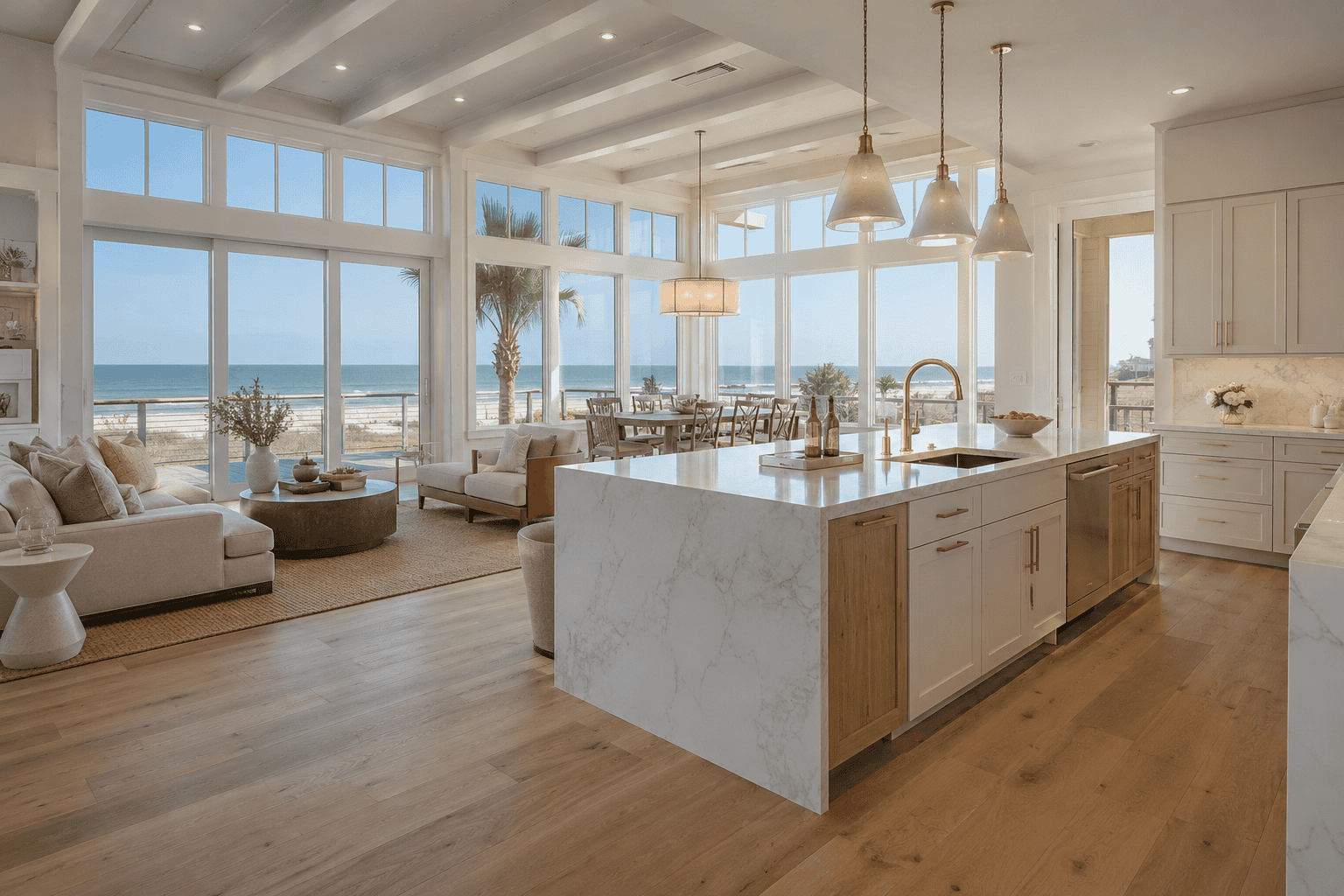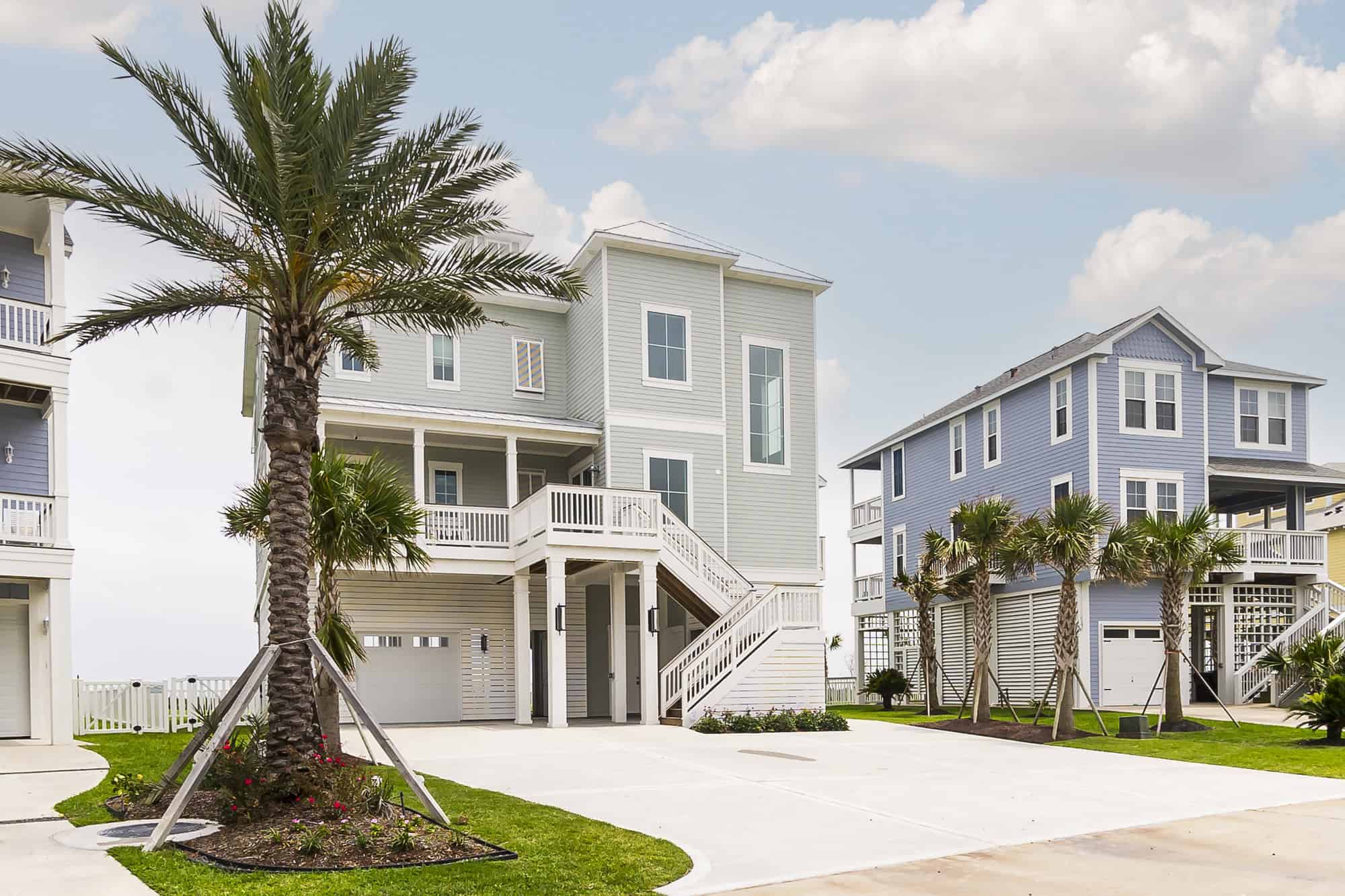
Choosing a coastal construction company is the single decision that determines whether your Galveston Island home stands up to the Gulf — or becomes a cautionary tale. Kai Custom Homes is a coastal construction company based on Galveston Island, Texas, specializing in custom stilt homes across the West End, Bolivar Peninsula, Crystal Beach, and San Luis Pass. With 35+ completed homes in some of the most demanding flood zones in the country, we build for exactly these conditions.
This guide explains what a coastal construction company actually does, why building on the Texas Gulf Coast is fundamentally different from building inland, what it costs, and how to choose a builder you can trust with a multi-year, multi-million-dollar project. Whether you’re comparing coastal construction services, looking for full-service coastal construction and design, or just trying to understand what you’re getting into, the goal here is the same one that defines how we work: answer the question directly, no runaround.
What Is a Coastal Construction Company?
A coastal construction company is a builder that specializes in homes built on or near the shoreline, where flood zones, storm surge, high winds, and salt exposure dictate how a structure must be engineered. It’s a distinct discipline from inland home building — not a marketing label.
The difference comes down to the environment. On Galveston Island, homes sit in FEMA-designated flood zones, must be elevated above Base Flood Elevation on stilt (piling) foundations, and must earn windstorm certification to be insurable. A general custom builder who does excellent work in a Houston subdivision is not automatically equipped for a beachfront lot on the West End. A true coastal construction company has solved these problems dozens of times before yours.
Put simply: every coastal builder is a home builder, but not every home builder is a coastal builder. On the island, that distinction protects your investment, your insurability, and your safety during a major storm.
What a Coastal Construction Company Actually Does
A coastal construction company manages the full path from raw lot to finished, storm-ready home — including the regulatory and engineering work that inland projects never touch. The scope is broader than most first-time coastal buyers expect.
At Kai, full-service coastal construction includes:
- Pre-construction pricing consultation — a real cost-per-square-foot range up front, plus an explanation of what drives your specific number.
- Architect and engineer coordination — we work with local coastal specialists who understand piling design and island conditions, or we collaborate with the architect you’ve already hired.
- Regulatory navigation — FEMA flood-zone compliance, Base Flood Elevation requirements, stilt/piling foundation specs, windstorm certification, and Galveston County floodplain permitting.
- Construction management — framing, dry-in, mechanicals, finishes, and final walkthrough, with a defined communication cadence the whole way.
- Problem-solving and follow-through — when challenges arise mid-build, they get solved, and we stand behind the home after you move in.
This is where coastal construction and design overlap. Many luxury buyers want one team coordinating architecture, engineering, and construction so the vision survives contact with reality. Coordinating those disciplines — rather than handing you off between them — is a core part of what a coastal construction company is for.
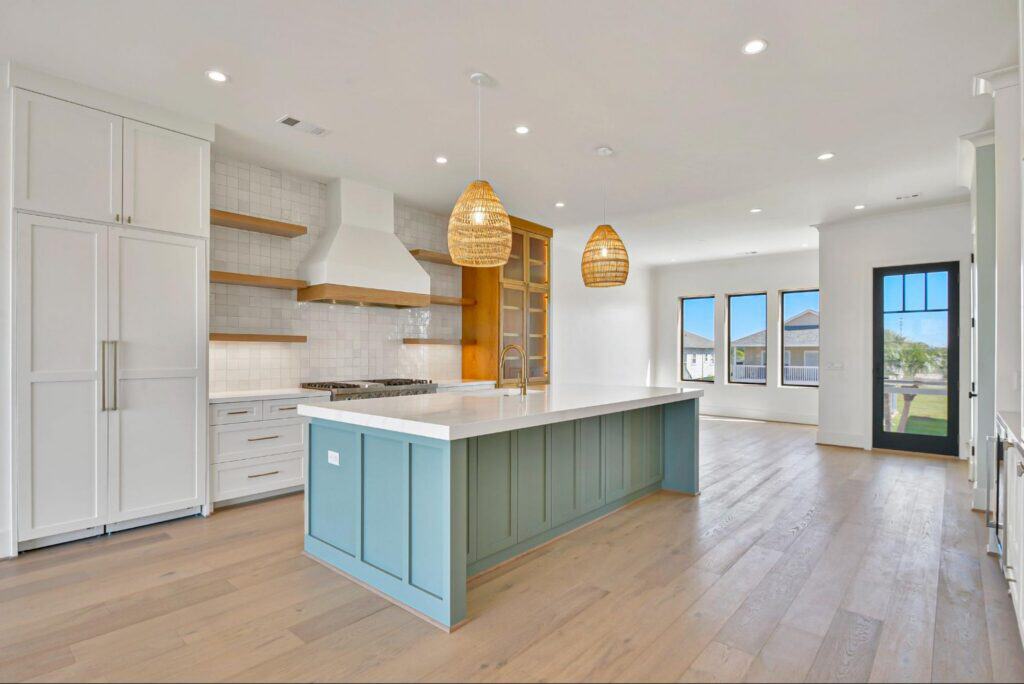
Why Coastal Construction on the Texas Gulf Coast Is Different
Building on Galveston Island means building in a FEMA flood zone, on the coast, in one of the most demanding construction environments in Texas. That one fact reshapes the foundation, the framing, the roof, the permitting, and the insurance — essentially the entire project.
Coastal homes here are built on stilts so the living space sits above the height floodwaters are expected to reach in a major storm. According to FEMA, Base Flood Elevation (BFE) is that expected flood height, and your home’s lowest floor must be engineered above it to comply and to remain insurable. Get the elevation wrong and you face redesigns, permitting delays, and flood-insurance premiums that can quietly reshape your budget.
Wind is the second force. The Texas coast carries some of the highest design wind requirements in the country, and homes here must meet windstorm standards to be certified. The Texas Department of Insurance administers windstorm inspections and certification (the WPI process) for designated catastrophe areas, which include Galveston County. Every structural connection — roof to wall, wall to foundation — has to be detailed and inspected to carry storm loads.
A coastal construction company that hasn’t navigated BFE, windstorm certification, and Galveston County floodplain permitting many times over is learning on your dime. The mistakes inland builders make here aren’t cosmetic; they show up as failed inspections, uninsurable homes, or — in the worst case — a structure that doesn’t perform when a storm arrives.
The Engineering Behind a Storm-Ready Coastal Home
A storm-ready coastal home is only as strong as its weakest connection, which is why the entire load path — not just the visible materials — has to be engineered and verified. This is the part of coastal construction that buyers rarely see and competitors rarely explain.
Take the roof. Owner Corbin Broesche is direct about a common misconception: two standing-seam metal roofs can look identical from the street and perform completely differently in a hurricane. Uplift performance depends on panel profile, seam design, clip spacing, fasteners, deck attachment, roof geometry, and the structural load path. The visible metal panel is only part of the story.
When an engineer specifies a roof pressure — say, a high negative (uplift) value measured in pounds per square foot — the right question is, “Show me the approval that actually achieves that.” Many commonly used systems don’t come close to the highest specified numbers. That’s not a knock on the products; it’s reality. The engineering requirement and the tested product approval have to match, on paper, for your exact roof deck and framing conditions.
And even a panel that meets its uplift rating doesn’t help if the force can’t travel safely to the ground. The load path runs from panel to clip to fastener to roof deck to rafters to hurricane straps to walls to foundation. Every connection in that chain matters. The strongest roof panel in the world is useless if the uplift connection fails somewhere else in the system.
That is the standard a real coastal construction company holds: verify the whole assembly, not just the brochure. Ask for approval documents, ask what pressure the assembly is rated for, and ask whether that approval applies to your specific conditions. If a product is truly compliant, the documentation is easy to produce. This is exactly the kind of scrutiny that separates a coastal specialist from a builder who hopes the system works as advertised.
How a Coastal Construction Company Builds: Inside the Kai Process
A well-run coastal build moves through clear, deliberate stages — and the difference between builders shows up in the details between those stages, not in the glossy before-and-after. Here’s what the process looks like from signing to keys.
It starts with getting the project ready for construction: permitting, engineering, and financing all lined up. Some clients sign before engineering is complete, so we move into that phase together; others arrive with plans in hand and head straight to permitting. We get materials ordered and hold a detailed pre-construction meeting so everything is on paper before the first piling goes in.
The first 60 to 90 days are about structure — framing the home and getting it to “dry-in,” the point at which the house is weather-tight and mechanicals can begin. One step many builders rush is the stretch between drying in, waterproofing, and siding the house. We don’t, because shortcuts there cause problems that don’t surface until years later.
Then comes a stage we call “box and can.” Before any wiring, we place the electrical boxes and recessed-light cans so locations are visible, then we walk the entire home with you. You see exactly where every outlet, switch, and light will sit, and why — and if you want to move something, this is the affordable time to do it. We wire the house, install structured wiring and any solar or fire-sprinkler systems, then walk it one final time before sheetrock. The principle is simple: it’s cheap before sheetrock and expensive after.
After that, the design work begins — tile, millwork, cabinetry, and finishes, typically over a couple of months. We move into paint, trim-out (plumbing fixtures, HVAC startup, electrical fixtures), a thorough clean, and final touch-ups. When the home is at the point the builder would happily move in himself, we do a final walk with you, build a punch list, and deliver. You move in; we handle the punch list.
That sequence isn’t unique because it’s secret. It’s unique because a coastal construction company that respects your money builds the boring, invisible steps as carefully as the showpiece ones.
If you’d like a real conversation about your lot and your timeline, reach out to the Kai team — we’ll tell you what’s realistic before you commit to anything.
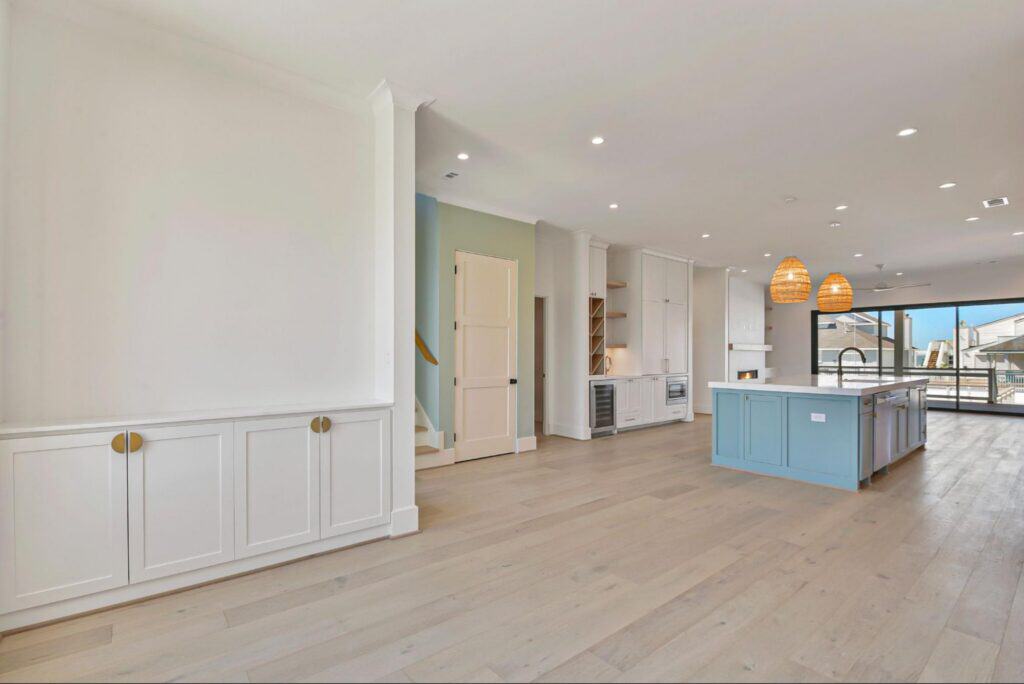
What Coastal Construction Costs in Galveston
A custom coastal home on Galveston Island generally costs about $350–$500+ per square foot, with most full builds landing in the $1.5M–$3M+ range for a 2,500–4,000 square foot stilt home. Timelines typically run 12–18 months from start to finish.
We publish those numbers on purpose. The most common frustration buyers report is not being able to get a straight answer on price, and a coastal construction company that deflects to “contact us for a quote” is usually hiding a learning curve you’ll end up funding. Your specific number moves with lot conditions, foundation depth, finish level, and design complexity — which is exactly why a good builder explains the drivers instead of hiding behind a single figure.
Coastal-specific costs are part of why these homes run higher than inland builds: deep piling foundations, elevated construction, windstorm-rated assemblies, and storm-grade materials all add cost that an inland home never carries. Understanding those drivers up front is how you set a realistic budget — and avoid the mid-build surprises that sour so many projects.
How to Choose a Coastal Construction Company
The best way to choose a coastal construction company is to test, with specific questions, whether a builder’s coastal experience is real or merely claimed. Among the coastal construction builders you’ll compare, the right one answers directly; the wrong one generalizes.
Use these criteria:
- A verifiable track record on this island. Look for a real number of completed homes on Galveston specifically — not “extensive experience” in the abstract. Kai has 35+ documented, located homes here.
- Genuine flood-zone and windstorm expertise. Your builder should be fluent in stilt foundations, Base Flood Elevation, windstorm certification, and Galveston County permitting. Ask how many stilt homes they’ve built.
- Transparent, upfront pricing. A trustworthy builder gives you a real cost-per-square-foot range early and explains what drives it.
- A structured communication model. A build is a 12–18 month relationship; silence is how it sours. Ask exactly how and how often you’ll be updated.
- Local engineering and architect relationships. Established relationships mean faster permitting and fewer redesign surprises.
- A portfolio you can verify. Ask for named, photo-documented projects — ideally homes you could drive past.
- Owner-led involvement. On a multi-million-dollar build, you want the owner personally accountable, not a job handed down to whoever’s free.
On the communication point specifically, Kai provides bi-weekly written project updates during construction and weekly updates during the finish phase — a defined cadence, not a vague promise to stay in touch. You should never have to wonder what’s happening on your own job site.
Red Flags to Avoid When Hiring a Coastal Builder
The clearest warning signs show up early, in how a builder talks about price, proof, and process — long before a contract is signed. Watch for these.
- Vague pricing. “It depends” with no range, or a refusal to discuss cost-per-square-foot until you’ve committed, usually signals inexperience with coastal builds or a plan to manage the budget after you’re locked in.
- Thin or stock-photo portfolios. A builder with real island experience can show named, photo-documented homes. A website full of generic imagery and no project list is a warning sign on a purchase this size.
- No structured communication. “We’ll keep you posted” is not a process. Without a defined update cadence, out-of-town owners end up chasing their own builder for answers.
- Hand-waving on engineering. If you ask about Base Flood Elevation, windstorm certification, or roof uplift approvals and get reassurance instead of specifics, keep looking. Coastal stakes are too high for “don’t worry, we’ve done it this way for years.”
- Inland-only experience. A strong record in Houston subdivisions doesn’t transfer to a beachfront lot. Ask specifically how many stilt homes they’ve completed on the coast.
The pattern behind every red flag is the same: generality where there should be specificity. A coastal construction company that truly knows this island answers with numbers, named projects, and documentation — because it has them.
Where We Build on the Texas Gulf Coast
Kai Custom Homes builds across Galveston Island’s West End, Bolivar Peninsula, Crystal Beach, and San Luis Pass, with work behind the seawall and throughout greater Galveston County. Each area builds a little differently in practice — lot access, soil and piling conditions, and exposure all vary — and 35+ homes across these locations is how we’ve learned those differences instead of discovering them on your project.
Most of our clients come from the Houston metro and Dallas, building a second home or future primary residence on the coast. Many already own their land, and building a vacation home on your own lot is the most common path to a custom home on the Texas Gulf Coast. Building a beach house from three hours away only works when your coastal construction company communicates well enough that distance stops mattering — which is the entire reason our update model exists.
Frequently Asked Questions
What does a coastal construction company do?
A coastal construction company designs and builds homes engineered for shoreline conditions — flood zones, storm surge, high winds, and salt exposure. Beyond standard construction, that means elevated stilt foundations, windstorm-certified assemblies, flood-zone permitting, and coordination with coastal engineers. At Kai, it also includes transparent pricing and a structured communication model throughout the build.
What’s the difference between a coastal construction company and a regular home builder?
A coastal construction company specializes in the demands of building on the coast: stilt foundations, Base Flood Elevation compliance, and windstorm certification. A general home builder may do excellent inland work but lack the specific experience a Galveston Island project requires. On the coast, that specialization affects insurability, permitting, and how the home performs in a storm.
How much does coastal construction cost in Galveston, TX?
Coastal stilt homes on Galveston Island typically cost about $350–$500+ per square foot, or roughly $1.5M–$3M+ for a 2,500–4,000 square foot home. The final number depends on lot conditions, foundation depth, finish level, and design complexity. A transparent coastal construction company will give you a real range up front rather than deflecting to a quote.
How long does it take to build a coastal home on Galveston Island?
Most custom coastal builds take 12–18 months from groundbreaking to final walkthrough. Coastal permitting, piling foundation work, and finish quality all affect the timeline. A builder who communicates a clear schedule — and updates you against it — is worth prioritizing.
Why do Galveston homes have to be built on stilts?
Homes on Galveston Island are built on stilt (piling) foundations to raise the living space above Base Flood Elevation, as required in FEMA flood zones. This protects the home during storm surge and is essential for insurability. An experienced coastal construction company designs these foundations as a matter of routine.
Ready to Build on the Texas Gulf Coast?
If you’re looking for a coastal construction company that will give you a real price, real updates, and 35+ homes worth of island experience, Kai Custom Homes would love to talk. Start a conversation with our team and we’ll walk you through what your coastal home could look like — clearly, and without the runaround.
Planning a build on Galveston Island or the Bolivar Peninsula? Call Corby direct at 713-909-0059 — you’ll get a real person and a straight answer — or start the conversation here and we’ll follow up within the day.