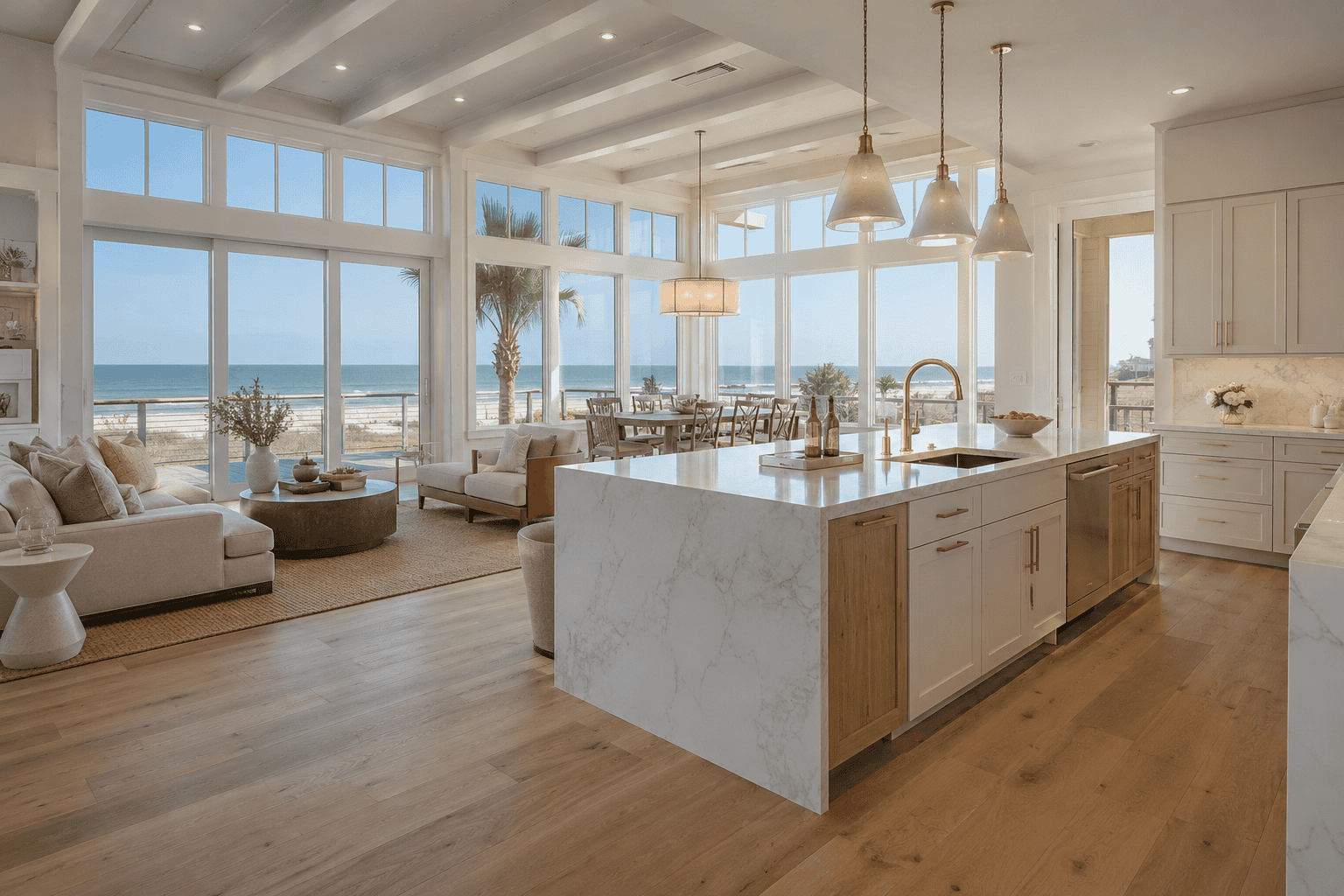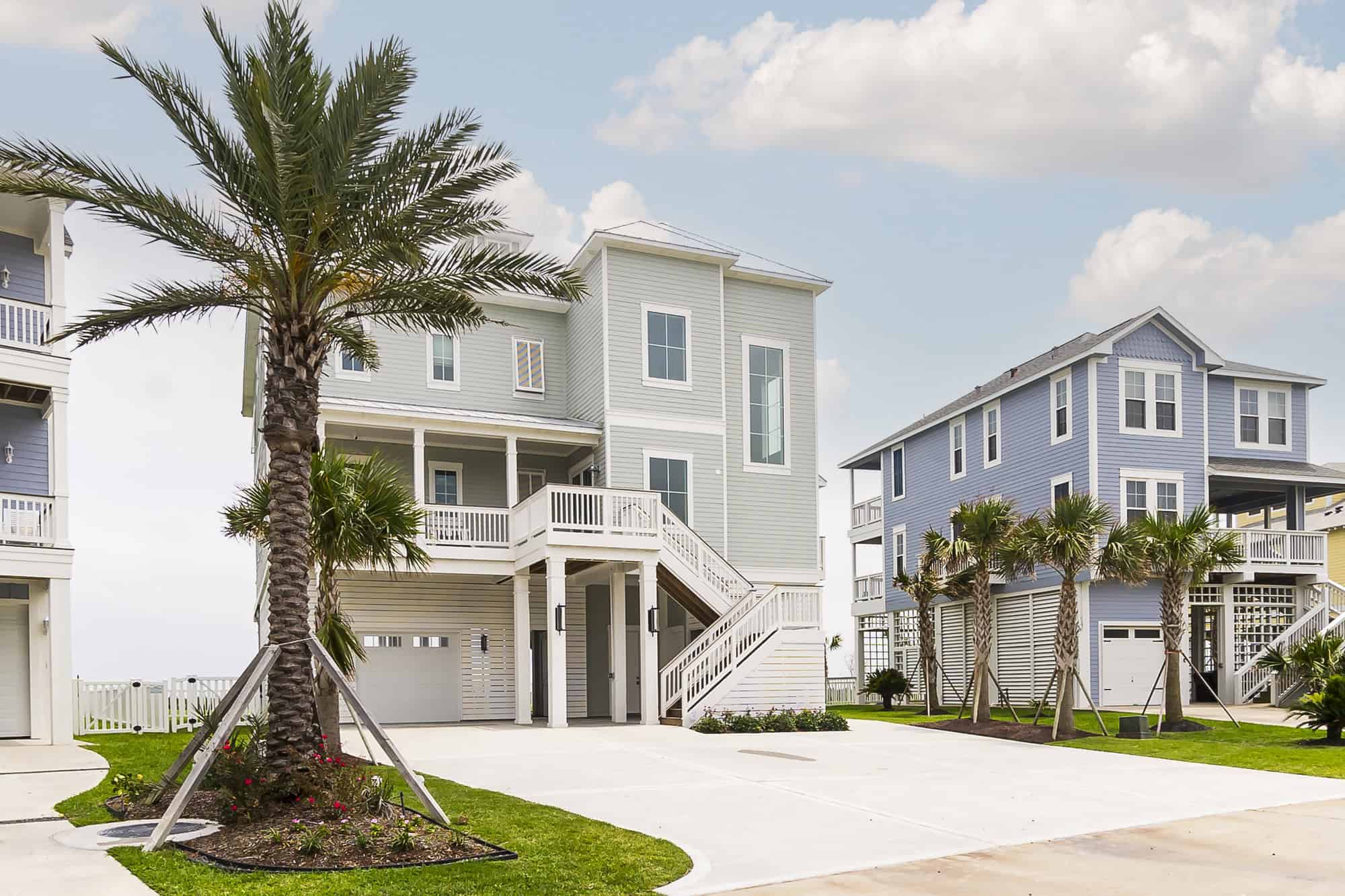
Building a house in Galveston, TX is unlike building anywhere else in Texas. The Gulf Coast environment, FEMA flood zone requirements, stilt construction mandates, windstorm certification, and a permitting process specific to coastal development — all of it adds layers that most inland builders have never navigated. If you’re planning a custom home on Galveston Island, the West End, Bolivar Peninsula, or Crystal Beach, understanding these realities before you hire a builder will save you time, money, and a lot of stress.
This guide covers everything you need to know: what it actually costs to build a home in Galveston, why the regulatory environment is different here, what stilt construction really involves, and what to look for when choosing the right builder for a coastal project.
Why Building a Home in Galveston Is Different
The first thing to understand is that Galveston Island is a barrier island. That single fact drives nearly every decision you’ll make during a custom build — from foundation type to material selection to how long your permitting process takes.
Galveston sits in a FEMA Special Flood Hazard Area, which means all new construction must comply with National Flood Insurance Program (NFIP) requirements. That includes meeting or exceeding Base Flood Elevation (BFE) — typically the 1% annual chance flood level — and in many areas, local ordinances require 1 to 3 feet of additional freeboard above BFE. The practical result is that most homes on Galveston Island and the surrounding Gulf Coast communities must be elevated, often significantly, above grade.
Homes in the West End of Galveston, Bolivar Peninsula, and Crystal Beach are not behind the seawall, which means they’re at lower elevations and face greater storm surge exposure. In these areas, homes are typically required to be built on pilings. This isn’t optional — it’s code. And it meaningfully affects design, engineering, cost, and timeline.
Understanding this from the beginning — before you buy a lot, before you hire an architect, before you pick a builder — will put you ahead of most buyers who call us after making expensive early decisions without a full picture.
What Does It Cost to Build a House in Galveston, TX?
This is the first question almost every client asks, and the honest answer is: coastal construction in Galveston costs more than inland Texas construction. Here’s why, and what to expect.
Galveston vs. Inland Texas: The Cost Difference
For context, the average custom home build in Texas generally runs $120 to $200 per square foot for standard inland construction. Coastal construction in Galveston is meaningfully higher — typically $350 to $500+ per square foot for a custom stilt home on the island, depending on size, finishes, and project complexity.
That premium reflects real cost drivers that don’t exist in inland builds:
Elevated foundation and piling system. A stilt/piling foundation — with proper depth, spacing, bracing, and connection hardware — is substantially more expensive than a standard slab. Coastal engineering requirements, soil borings, and the physical cost of driving pilings into Gulf Coast soil all add up.
Corrosion-resistant materials. Salt air accelerates corrosion. Every fastener, every railing, every mechanical system needs to be rated for a coastal environment. This isn’t an upgrade — it’s a requirement if you want your home to last.
Windstorm-rated construction. All new construction in the First Tier Coastal Zone must meet Texas Department of Insurance windstorm construction standards. This affects framing, roofing, windows, doors, and connection hardware throughout the structure.
Permitting and inspections. Galveston County floodplain permitting, City of Galveston development permits (where applicable), windstorm inspections — the regulatory process for a coastal build is more involved than a standard inland permit.
Typical Project Budget for a Kai-Built Custom Home
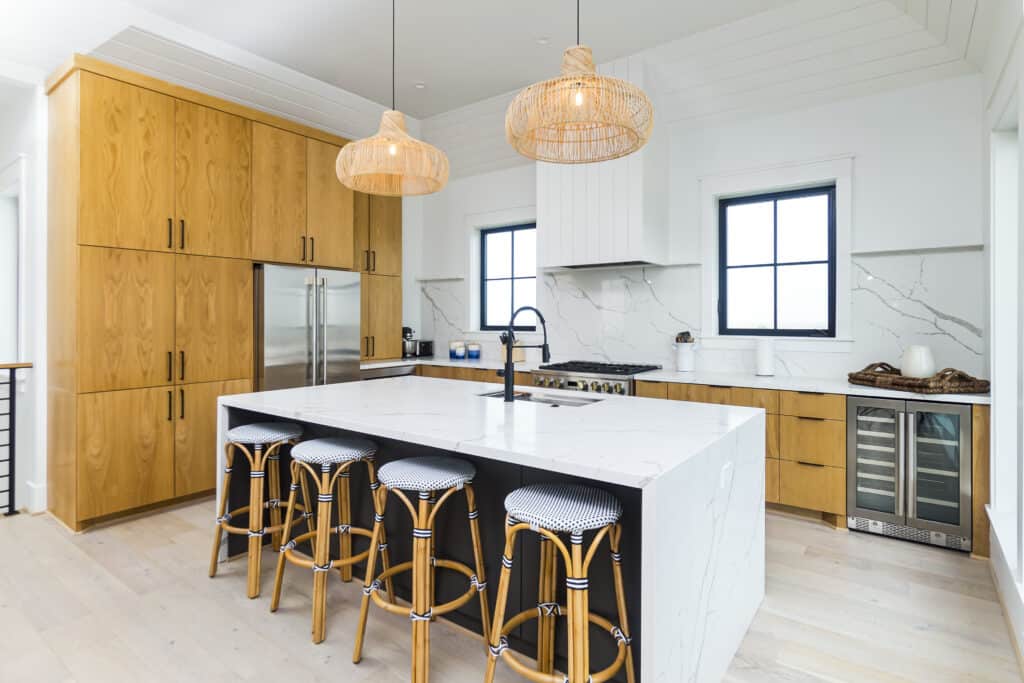
For the custom homes we build — typically 2,500 to 4,000+ square feet on the West End, Bolivar Peninsula, or Crystal Beach — total project budgets generally run $1.5 million to $3 million or more, depending on square footage, the scope of finishes, lot conditions, and any site-specific engineering requirements. That figure includes construction but typically excludes land if you already own your lot.
We know most people want a number before they commit to a builder conversation. That’s a reasonable ask, and it’s one we take seriously. We’ll give you real cost-per-square-foot ranges at the start of our first conversation — not a runaround.
Understanding Stilt Construction on Galveston Island
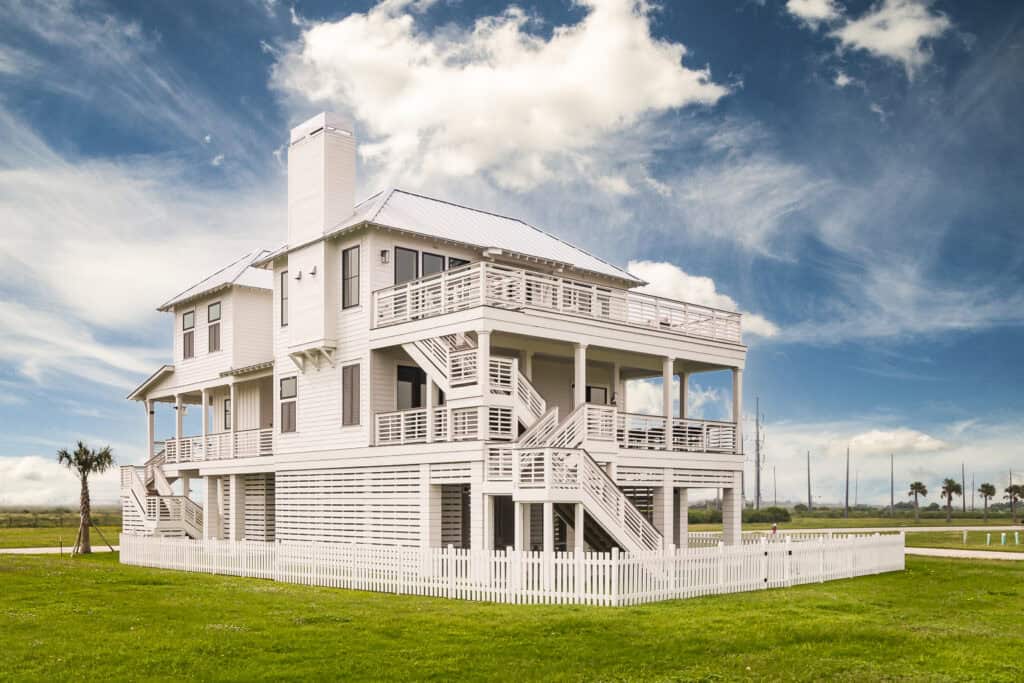
If you’re building in the West End, on Bolivar Peninsula, or anywhere outside the seawall, you’re almost certainly building on stilts. Let’s walk through what that actually means.
Why Stilt Homes Are Required
Homes outside the Galveston seawall are in unprotected flood zones at lower elevations. FEMA flood maps classify most of these areas as Zone VE (coastal high hazard) or Zone AE (high risk), with BFE requirements that often put the first floor of a home 12 to 18 feet above grade. Building on pilings is the engineering solution that achieves that elevation while also allowing storm surge to pass beneath the structure rather than exert full hydrostatic pressure against the walls.
This is why the breakaway wall requirement exists. The area beneath an elevated coastal home — the ground floor area used for parking or storage — must be constructed with walls designed to break away under flood load. It’s counterintuitive to someone unfamiliar with coastal construction, but it’s a key part of flood-resilient design.
What Goes Into a Coastal Piling Foundation
A piling foundation for a Galveston coastal home typically involves:
- Concrete or treated timber pilings driven to a specified depth based on soil boring data and engineering calculations
- Piling sizing and spacing determined by the loads the structure will carry and local code requirements
- Connection hardware that ties pilings to beams and the structure above, rated for both wind uplift and lateral storm forces
- Engineering documentation required for permit submittal
We work with coastal engineers who know Galveston’s soil conditions, BFE requirements, and county permitting expectations. For a buyer building their first coastal home, that local engineering relationship is not a small thing — it’s what keeps your permit process moving and your foundation correctly spec’d.
Galveston’s Regulatory Environment: What You’ll Navigate
Building a home in Galveston means working through a regulatory layer that most inland builders have never encountered. Here’s a plain-language summary of what’s involved.
FEMA Flood Zones and Base Flood Elevation
Every lot on Galveston Island has a flood zone designation on FEMA’s Flood Insurance Rate Maps (FIRMs). Before you buy land or design a floor plan, you need to know your lot’s BFE. That number determines your minimum first-floor elevation, which in turn affects your piling height, your stairs, your garage options, and your flood insurance rates.
Homes built at or above BFE generally qualify for lower NFIP flood insurance rates. Homes built with additional freeboard (above BFE) qualify for even lower rates. A builder who understands this relationship — and who builds it into your home’s design from the start — is working in your financial interest long after the build is complete.
Galveston County Floodplain Permitting
Galveston County has enforced floodplain regulations since 1971. New construction in the unincorporated areas of the county — which includes most of the West End and Bolivar Peninsula — requires a development permit from the Galveston County Office of Floodplain Management. The application requires site plans, elevation certificates, foundation plans, and other engineering documentation. Permit review timelines can run several weeks to a few months.
Windstorm Certification
Under the Texas Insurance Code, new construction in the first-tier coastal counties — including Galveston County — must comply with windstorm construction standards established by the Texas Department of Insurance (TDI). To qualify for windstorm and hail insurance through the Texas Windstorm Insurance Association (TWIA), your home must be inspected during construction by a TDI-approved inspector and receive a Certificate of Compliance.
This is not a post-construction certification. Windstorm inspections happen during the build — at framing, sheathing, and roofing stages. A builder who isn’t familiar with this process, or who doesn’t coordinate it correctly, can create certification problems that are expensive and time-consuming to resolve after the fact.
We’ve managed windstorm certification for 35+ homes on this island. It’s part of our standard process.
Choosing the Right Builder for a Galveston Custom Home
The single most important decision you’ll make in a coastal custom build is who builds it. Here’s what actually matters.
Coastal and Stilt Home Experience — Specifically on the Island
There’s a difference between a builder who has built homes in Texas and a builder who has built stilt homes in FEMA VE zones on Galveston Island. The flood zone compliance, the engineering coordination, the permitting process, the windstorm inspection protocol, the material selections for salt air exposure — none of this transfers from inland construction experience. When you’re evaluating builders, ask specifically how many stilt homes they’ve built in Galveston County, and ask to see the named projects.
We’ve completed 35+ custom homes across Galveston Island, the West End, Bolivar Peninsula, and Crystal Beach. Each one built on pilings. Each one permitted, certified, and standing through multiple hurricane seasons.
Pricing Transparency
One of the most common frustrations buyers bring to their first builder conversation is that they can’t get a straight answer on cost. Vague pricing language — “it depends,” “we’ll need to see your plans,” “every project is different” — may be technically accurate, but it leaves buyers unable to make informed decisions.
A builder who has done this enough times should be able to give you a real cost-per-square-foot range based on your project type, location, and finish level. Not a final bid — that comes after design — but a real starting point that tells you whether you’re in the right budget conversation. We give that number at the first meeting, every time.
Communication Throughout the Build
A custom home build runs 12 to 18 months. That’s a long time to feel uninformed. The most common complaint in the custom home industry — consistently, across every buyer survey — is that clients feel left in the dark once construction begins.
Our process is built around solving that problem. Every two weeks during construction, you receive a written project update. Every week during the finish phase. You know what was completed, what’s coming next, and if anything has changed. You never have to chase your builder for information about your own home.
Local Relationships with Engineers and Inspectors
Galveston coastal construction requires a team: your builder, a coastal structural engineer, a TDI-approved windstorm inspector, and the county floodplain office. A builder with established relationships across all of these parties moves faster, resolves issues more efficiently, and avoids the costly miscommunications that can slow a coastal project down.
The Build Process: What to Expect
Here’s a general timeline for a custom coastal home build in Galveston from initial conversation to move-in.
Months 1–3: Pre-Construction Initial builder consultation and pricing conversation; lot evaluation; engagement of architect and coastal engineer; design development; permit applications submitted. This phase takes longer on the coast than inland — plan for it.
Months 3–6: Permitting and Site Prep Galveston County floodplain permit review; any City of Galveston permits if applicable; final engineering; site preparation and piling installation. Piling installation is a milestone moment — it’s when the build becomes visible and the foundation of everything else is set.
Months 6–14: Framing Through Weathertight Framing, sheathing, roof, windows, and doors. Windstorm inspection stages happen here. Once the building is weathertight, mechanical rough-ins (HVAC, electrical, plumbing) begin.
Months 14–18: Finishes and Completion Interior finishes, cabinetry, flooring, fixtures, exterior elements, decks, final inspections, certificate of occupancy. This phase is when weekly updates are most useful — there are more decisions and more visible daily progress.
Frequently Asked Questions
Do I need to own a lot before contacting a custom home builder in Galveston? No — and in fact, reaching out before you buy land is often a smart move. A builder with local experience can help you evaluate a lot’s flood zone designation, BFE, access to utilities, and any site-specific factors that affect construction cost before you commit to the purchase.
How long does it take to build a custom home in Galveston? Most custom coastal builds on the island run 14 to 18 months from contract to completion. The pre-construction phase — design, engineering, and permitting — can add 3 to 6 months before ground is ever broken. Planning a realistic total timeline from the start prevents the frustration that comes from expecting a shorter process.
What does it cost to build a home on stilts in Galveston? For a luxury custom stilt home in the 2,500 to 4,000 square foot range, expect total construction costs in the $1.5M to $3M+ range depending on square footage, finishes, and site conditions. The elevated piling foundation, coastal-grade materials, and windstorm-rated construction all add cost above standard inland builds.
What flood insurance will I need? Most homes on Galveston Island are required to carry flood insurance through FEMA’s National Flood Insurance Program (NFIP) as a condition of their mortgage. Homes built at or above BFE — especially those with additional freeboard — typically qualify for lower NFIP premiums. Your builder should be factoring BFE compliance and freeboard into your design from day one.
Can I work with my own architect and still hire Kai Custom Homes as my builder? Absolutely. We work with client-provided architects regularly. Our role is to collaborate with your design team, coordinate coastal engineering and permitting, and build what’s been designed — on time, on budget, and with full transparency throughout. We’re the builder who makes your architect look good.
Ready to Build on Galveston Island?
Building a house in Galveston, TX is one of the most rewarding investments you can make — and one of the most complex to execute correctly. The flood zone requirements, stilt construction demands, windstorm certification, and coastal regulatory environment require a builder who has done this before, specifically here, and who can walk you through every stage of the process with full transparency.
Kai Custom Homes has built 35+ custom coastal homes across Galveston Island, the West End, Bolivar Peninsula, and Crystal Beach. We give you real pricing in our first conversation. We send written updates every two weeks throughout your build. And we treat every project like it’s the most important thing we’re working on — because for you, it is.
If you’re thinking about building on the Texas Gulf Coast, reach out and let’s start the conversation. We’ll tell you exactly what it costs, what it takes, and whether we’re the right fit for your project.