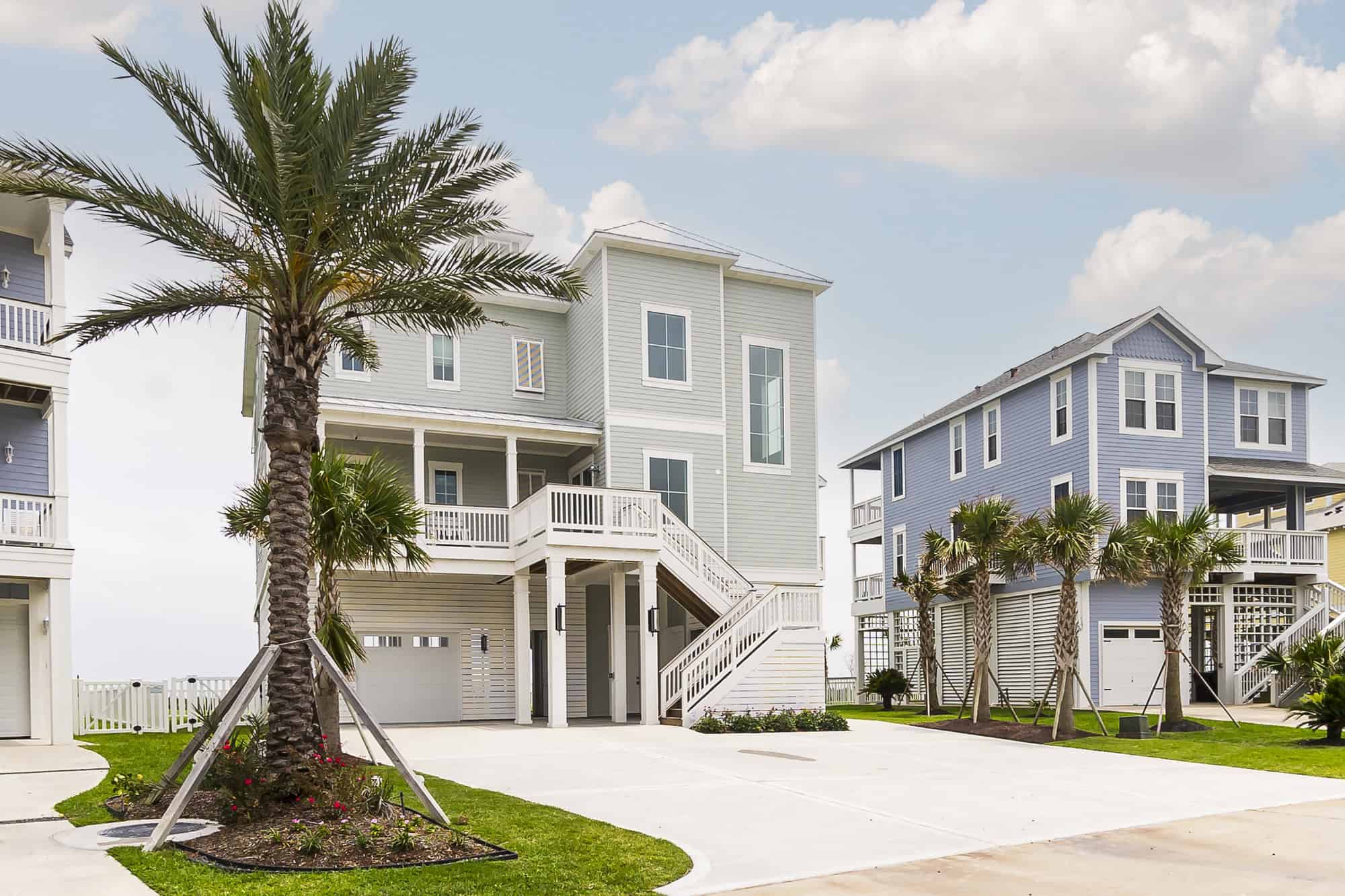
Before you buy Galveston land for sale to build a home, check nine things: which city governs the lot, its flood zone, how close it sits to the beach, the deed restrictions, the rental rules, utilities, soil and bulkheads, windstorm insurance, and what the whole project will cost. Any one of them can change what you can build, or whether you should buy at all.
Kai Custom Homes is a Galveston custom home builder with 35+ completed coastal homes on the island, most of them on the West End. We don’t sell lots. We have helped clients find and negotiate them, though, and we’ve seen what happens when a buyer skips a step. This is the checklist we walk through before anyone signs a contract on a lot.
Quick Facts: Buying a Lot to Build in Galveston
Who issues permits: the City of Galveston for most of the island; the City of Jamaica Beach inside its limits.
Flood elevation: City of Galveston homes must sit at least 18 inches above base flood elevation (BFE).
Beachfront permit: needed within 1,000 feet of mean high tide, on top of the building permit.
Windstorm: a TDI windstorm certificate is required for TWIA coverage, and inspections happen during construction.
Typical lot prices (recent West End listings): interior lots from about $45,000 to $175,000; canal lots about $100,000 to $400,000; beachfront lots about $300,000 to $450,000 and up.
Typical build cost: about $350 to $500+ per square foot for a custom elevated home, on top of the lot.
1. Which City Governs the Lot?
Most of Galveston Island is inside the City of Galveston, which issues building permits and enforces its flood and beachfront rules. Jamaica Beach, in the middle of the West End, is its own city with its own building department, permit portal and flood ordinance.
That matters more than buyers expect. Jamaica Beach requires engineered pilings on every new home, even outside the highest-risk flood zone, and sets its own setbacks section by section. Across the causeway, Tiki Island is its own village too. Confirm the jurisdiction first, because every other rule on this list depends on it.
2. What Flood Zone Is the Lot In?
Every lot on the West End is in a FEMA flood zone, and the zone sets how high and how expensively you build. VE zones, usually nearest the Gulf, expect breaking waves and require an open foundation of pilings or columns with breakaway walls below. AE zones, usually farther back or on the bay, are less severe but still require you to build above the base flood elevation.
In the City of Galveston, the lowest floor of a new home must sit at least 18 inches above BFE, per the City’s flood protection requirements. In a VE zone, that’s measured to the bottom of the lowest structural beam. Some communities ask for more: Beachside Village requires BFE plus 2.5 feet.
Look the lot up yourself before you make an offer:
FEMA’s flood map tools show the zone and BFE by address.
The City’s Development Services office will confirm a flood zone for you.
An elevation certificate from a surveyor gives you the exact numbers for that lot.
3. How Close Is It to the Beach?
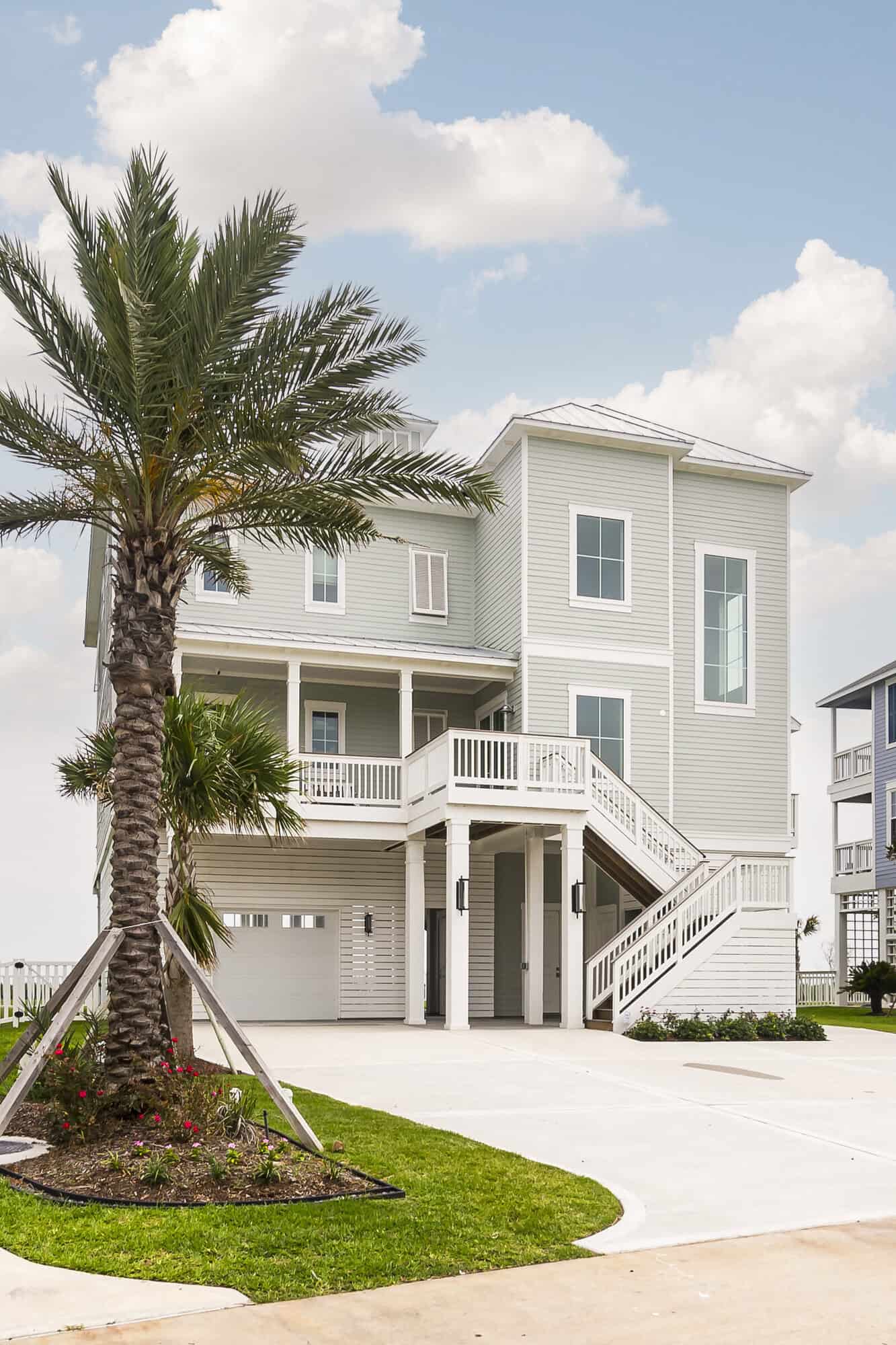
If the lot is within 1,000 feet of mean high tide, you’ll need a City of Galveston Beachfront Construction Certificate and Dune Protection Permit before you can build. The Texas General Land Office reviews every application, and the City’s application form puts the timeline at about four to six weeks from a complete submission.
The rules inside that zone are where beachfront lots get complicated:
Dune Protection Line: 25 feet landward of the back of the dune. You can’t build seaward of it without a Planning Commission exemption, which adds two to six weeks.
Enhanced Construction Zone: the next 125 feet landward, where higher construction standards apply.
Concrete limits: no reinforced concrete within 200 feet of the line of vegetation.
Survey: the application needs a current survey showing the vegetation line and the dune.
A beachfront lot can be a wonderful place to build. Just know how much of it is actually buildable before you pay for all of it.
4. Is the Lot Exposed to the Open Beaches Act?
Texas law gives the public the right to use the beach up to the line of vegetation, and that line moves as the shoreline erodes. If erosion puts a home on the public beach, the State can require its removal at the owner’s expense.
Because of this, sellers of property seaward of the Gulf Intracoastal Waterway, which includes all of Galveston Island, must give buyers a coastal disclosure. TREC publishes it as an addendum. Read it, and ask how much the shoreline in front of the lot has moved over the years.
5. What Do the Deed Restrictions Say?
Most West End subdivisions have recorded deed restrictions and an association that reviews plans before you build. These rules decide the size, look and timing of your home, so read them before you buy, not after.
Things we’ve seen in West End restrictions:
Minimum home sizes. One Pirates Cove section requires at least 1,100 square feet of living area; Laffite’s Cove’s original restrictions require 1,600.
Design codes. Beachside Village requires aluminum metal roofs, bright or pastel colors and front porches.
Build deadlines. Some sections require the exterior to be finished within six months of starting.
Approved builders. Some communities only allow builders on an approved list.
Review time and deposits. Architectural committees typically take up to 45 days and may hold a deposit of several thousand dollars.
If you’re weighing two or three lots, send us the addresses. We’ll read the restrictions and tell you what each one would mean for your design and your budget before you’re committed. You can reach us through our contact page.
6. Can You Rent It Out?
Short-term rental rules vary street by street. The City of Galveston requires an annual short-term rental registration, and Jamaica Beach runs its own program with occupancy limits. Many associations go further: Pirates Cove and Laffite’s Cove don’t allow rentals shorter than 90 days.
If rental income is part of your plan, confirm the rules for the exact section before you buy. If it isn’t, a community with rental limits may be exactly what you want.
7. Does It Have City Water and Sewer?
Most established West End subdivisions are on City water and sewer, but don’t assume it. A lot without sewer needs a septic system permitted by the Galveston County Health District, and the City won’t issue a building permit without it. Ask the seller for proof of service, or get a utility availability letter and tap-fee estimate from the City before closing.
8. What’s Under the Ground, and at the Water’s Edge?
Every home on the West End is built on deep foundations, and what’s 20 to 30 feet underground decides how they’re designed. Your engineer sets piling depth from the soil, the loads and the expected scour. Corby Broesche, Kai’s owner, personally sets the elevation and piling height on every home we build, because getting it right in the field matters as much as the drawing.
On canal and bay lots, check the bulkhead. A new concrete bulkhead adds real value; a failing one is expensive to replace, and work in the water may need a U.S. Army Corps of Engineers permit.
9. Can You Insure It?
Most Galveston homeowners get wind coverage through the Texas Windstorm Insurance Association (TWIA), which requires a windstorm certificate from the Texas Department of Insurance. The inspections happen during construction, so the certificate can’t be added after the fact. TDI explains the process in its WPI-8 fact sheet.
TWIA also requires a flood insurance policy on homes in V zones built after September 2009, per its flood requirement. Get insurance quotes on the lot’s zone before you buy, because they’re a real part of your yearly cost.
How We’ve Helped Clients Find the Right Lot
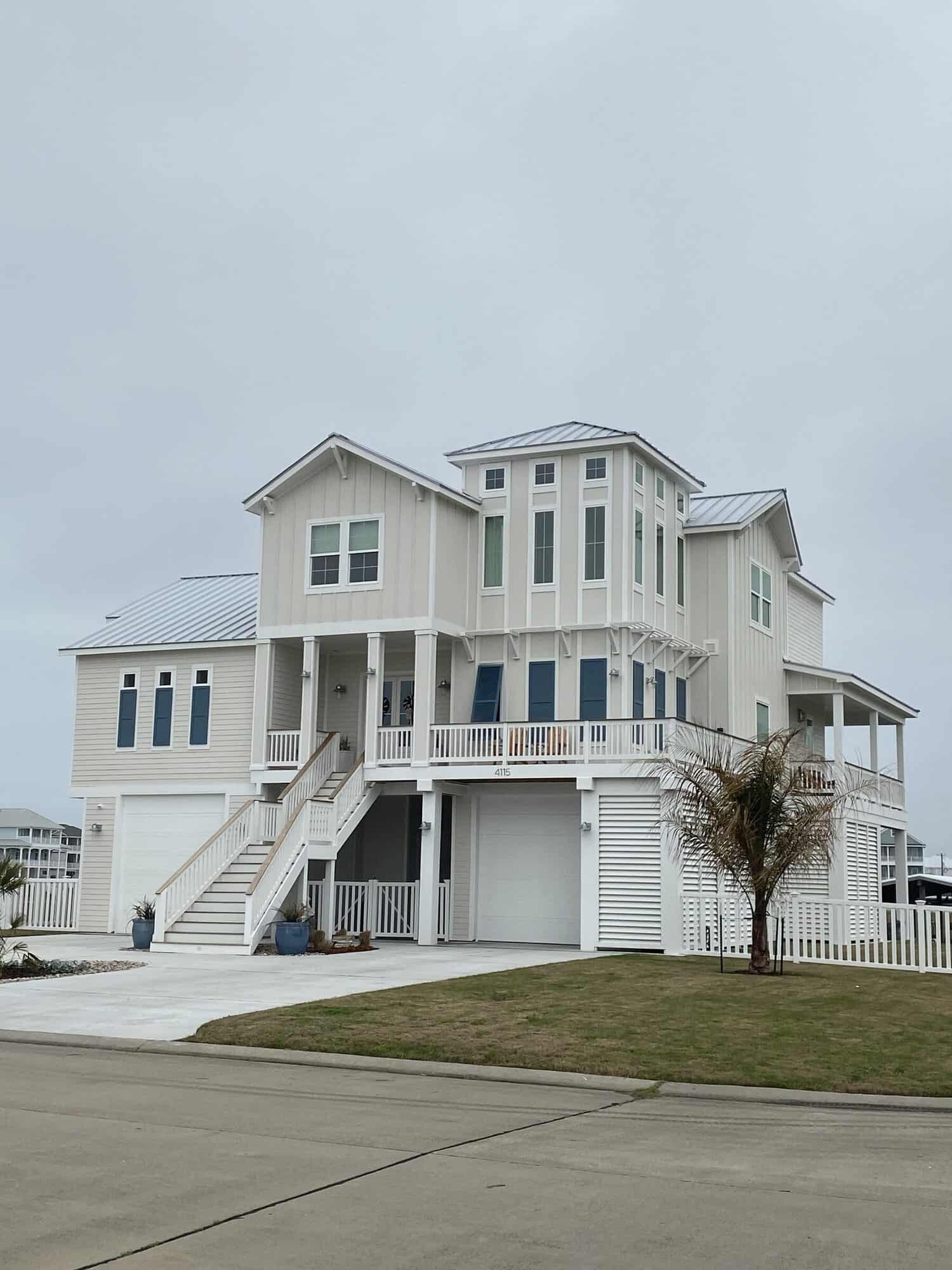
Two of our clients came to us before they owned a lot, and both builds started with the land.
In Sunset Cove, a couple referred by their realtor knew the neighborhood they wanted but hadn’t secured a lot. We identified the right canal property, helped negotiate the deal and brought the architect and engineer into our contract before a plan was drawn. The finished home, built in 2020, is 2,789 square feet on a 12,400-square-foot canal lot, with a boat dock and a ground-floor entertaining area.
In Pointe West, a long-time acquaintance wanted to build on the beach. We found a lot on an expanding stretch of the far West End, helped secure it, then interviewed and selected the architect and engineer. That home, finished in 2023, is 3,713 square feet with Gulf porches and a ground-floor bar.
Starting with the builder this early costs you nothing and can save you from buying a lot that doesn’t fit your plans.
What Will the Whole Project Cost?
Plan on the lot plus about $350 to $500+ per square foot to build. For the 2,500 to 4,000 square foot homes we usually build, construction runs between $1.5 million and $3 million or more, and takes 12 to 18 months from permit to keys.
What pushes a lot toward the top of that range:
A VE flood zone, which means taller pilings and breakaway construction.
Beachfront permitting and setback limits.
Demolition, if there’s an older home on the lot.
A new bulkhead, dock or boathouse.
Community design codes that specify roofing, siding or windows.
We give every client a real number up front and explain what drives it, so the lot you buy and the home you want stay in the same budget.
Frequently Asked Questions About Buying Land in Galveston
How much does a lot cost in Galveston?
It depends on the water. Recent West End listings ran from about $45,000 for interior lots to $100,000 to $400,000 for canal lots and $300,000 or more for beachfront. Check current sales on HAR.com before you make an offer.
Can you build on a beachfront lot in Galveston?
Yes, with a City Beachfront Construction Certificate and Dune Protection Permit. You can’t build seaward of the Dune Protection Line without an exemption, so how much of a beachfront lot is buildable depends on where the dune sits.
How high do houses have to be built in Galveston?
In the City of Galveston, the lowest floor must be at least 18 inches above the base flood elevation, and in VE zones that’s measured to the bottom of the lowest beam. Jamaica Beach requires one foot above BFE, and some communities require more.
Can a builder help me find a lot?
Yes. We’ve found and negotiated lots for clients in Sunset Cove and Pointe West. A builder can tell you what a lot will really cost to build on before you own it.
Talk to Us Before You Buy the Lot
The right lot makes everything after it easier: the design, the permits, the budget and the insurance. If you’re looking at Galveston land for sale and want a builder’s read on it, send us the address. We’ll check the flood zone, the restrictions and what it would take to build there, and give you a straight answer.
Call Corby at 713-909-0059 or send us the details through our contact page. We’ll tell you what we see before you’re committed.